You were driving through an intersection with a green light when another vehicle ran the red light from your right, slamming into your driver’s side door at full speed. The T-bone collision (also called broadside or side-impact accident) left your vehicle totaled, caused serious injuries including multiple rib fractures and a head injury, and will require months of recovery. The other driver claims their light was yellow and you should have yielded. The police report is inconclusive about who had the right-of-way. You’re facing mounting medical bills, can’t work, and insurance companies are arguing about fault. You wonder: Who is typically at fault in T-boned accidents? How do you prove the other driver ran the red light? What compensation can you recover for serious injuries from side-impact collisions? Why are T-bone accidents so dangerous compared to other crash types?
T-bone accidents are among the most dangerous collision types because vehicles’ sides offer minimal crash protection compared to front and rear crumple zones, no engine block or trunk to absorb impact forces, just a door and window between you and the striking vehicle. Understanding common causes of T-bone collisions, how fault is determined at intersections, unique injury patterns from side impacts, insurance claim challenges, and why experienced auto accident attorneys are essential helps victims pursue maximum compensation for these serious crashes.
Common Causes of T-Bone Accidents
Side-impact collisions overwhelmingly occur at intersections where traffic flows cross and right-of-way violations create catastrophic impacts.
Red light violations represent the most common cause of T-bone accidents. Drivers run red lights for various reasons, distracted by phone use, eating, or adjusting controls, speeding and misjudging their ability to “make” the yellow light, aggressive driving that deliberately runs lights to save time, drowsy driving that delays reactions, impairment from alcohol or drugs that destroys judgment, or simple unfamiliarity with an intersection. The red light runner bears fault in virtually every case since they violated traffic control devices designed to prevent exactly these collisions.
Stop sign violations create similar dangers when drivers roll through without making complete stops, fail to check for cross traffic, misjudge the distance or speed of approaching vehicles, or face obstructed views from parked cars, overgrown vegetation, or poor intersection design. The driver violating the stop sign typically bears fault for the resulting collision.
Left-turn accidents occur when drivers turning across oncoming traffic misjudge the speed of approaching vehicles, fail to yield right-of-way as required, or face obstructed views that prevent them from seeing oncoming cars. The left-turning driver usually bears fault unless the oncoming vehicle ran a red light or was speeding so excessively that the turning driver’s misjudgment becomes understandable.
Right-of-way confusion at four-way stops, yield signs, and uncontrolled intersections causes T-bone collisions when drivers misunderstand who should proceed first, both attempt to go simultaneously, or one fails to yield as traffic laws require. Liability in these cases depends on which specific right-of-way rule was violated.
Drunk or impaired driving creates T-bone accidents through reduced reaction times, poor judgment, vision impairment, and delayed braking. DUI-related T-bone collisions prove particularly devastating because intoxicated drivers often maintain high speeds through intersections they should stop at or slow for.
Distracted driving causes drivers to miss critical information at the exact moment they need it, texting or phone conversations, looking at passengers, adjusting GPS or entertainment controls, or eating and grooming while driving all pull attention from the road precisely when intersection navigation requires full focus. The distracted driver typically bears fault when their inattention causes a collision.
Speeding contributes to both causation and severity of T-bone accidents. Excessive speed prevents drivers from stopping in time when lights change, makes it impossible to judge light timing accurately, dramatically increases impact forces when collisions occur, and reduces the time available for evasive action that might avoid or mitigate the crash.
At The Joseph Dedvukaj Firm, we investigate T-bone accidents to establish fault through witness statements, traffic camera footage, accident reconstruction, and other evidence proving the other driver violated traffic laws or drove negligently.
Determining Fault in T-Bone Collisions
Fault determination in T-bone collisions combines clear traffic laws with physical evidence that reconstructs what happened during those critical seconds before impact.
Traffic control devices establish right-of-way. At traffic lights, drivers with green lights have right-of-way while drivers facing red lights must stop. Yellow lights require stopping if safe to do so. At stop signs, drivers must yield to cross traffic, and at four-way stops, the first vehicle to stop proceeds first, with the right-hand vehicle having priority when arrivals are simultaneous. Yield signs require drivers to give way to vehicles with right-of-way.
Michigan law establishes specific right-of-way rules: green light vehicles have right-of-way over red light traffic, through traffic has priority over turning traffic, vehicles already in the intersection have right-of-way, and at uncontrolled intersections, the vehicle on the right proceeds first. These rules create presumptions of fault, red light runners are presumed at fault, as are left-turning drivers who strike oncoming traffic, though evidence can rebut these presumptions.
Multiple types of evidence prove fault when claims are disputed. Traffic camera footage from city systems, businesses, or nearby homes shows which driver had what signal, documents traffic flow, and captures the collision itself. Witness statements from other drivers, pedestrians, and passengers provide independent accounts, though passenger testimony sometimes faces bias challenges. Police reports document the officer’s fault determination, citations issued, witness accounts, and include accident diagrams.
Physical evidence tells the collision story. Impact location showing side damage proves you were struck while lawfully crossing the intersection. Skid marks reveal braking points and speeds. Debris fields indicate the point of impact. Vehicle damage patterns allow experts to reconstruct collision dynamics. Traffic signal timing from engineering records proves what lights were showing at the crash moment. Cell phone records subpoenaed in litigation prove distracted driving if the other driver was on the phone. Black box data from vehicle event data recorders shows speed, braking, and throttle position, critical for proving excessive speed or failure to brake.
Even clearly at-fault drivers often raise comparative negligence arguments, claiming you were speeding, could have avoided the collision, or ran a yellow light. Michigan’s comparative negligence law (MCL 600.2959) reduces your recovery by your percentage of fault, and if you are found more than 50% at fault it bars non-economic damages such as pain and suffering entirely. Economic damages are still recoverable in that situation, reduced by your share of fault. Experienced attorneys counter these arguments with evidence showing you drove lawfully and couldn’t reasonably have avoided the collision caused by the other driver’s traffic law violation.
Why T-Bone Accidents Cause Serious Injuries
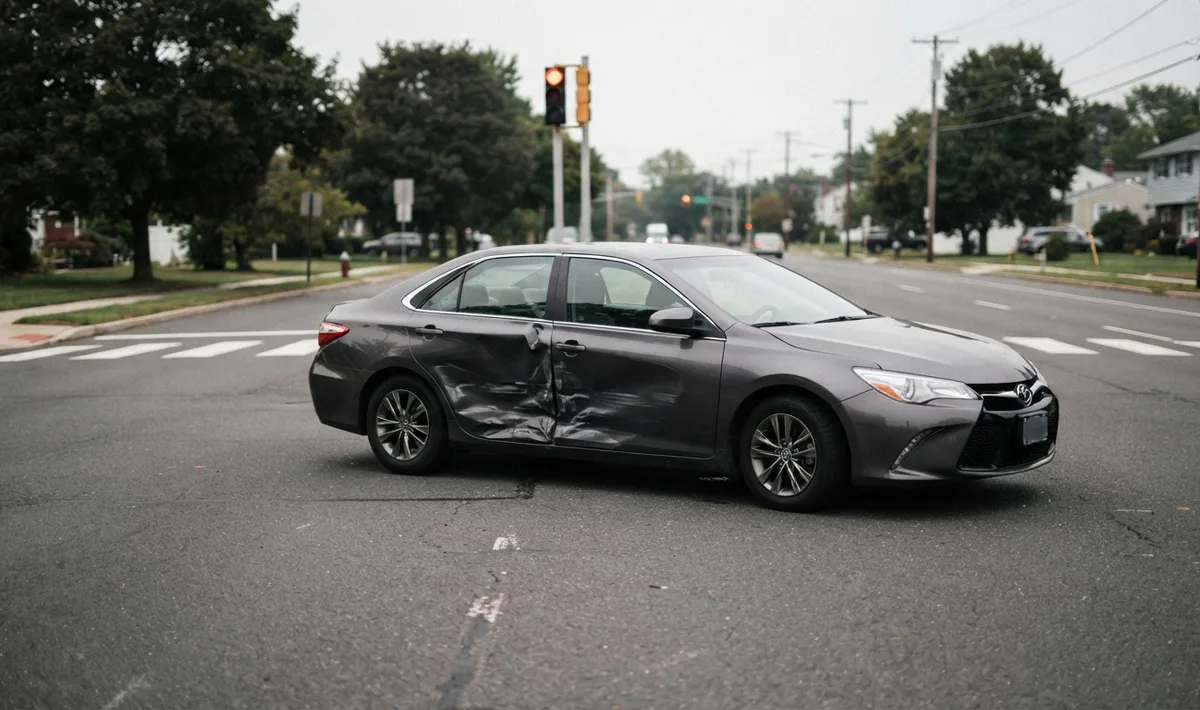
[IMAGE_PLACEHOLDER] Alt text: Vehicle showing minimal side-impact protection explaining catastrophic injury severity in Michigan T-bone collision cases
Side-impact collisions are inherently more dangerous than frontal or rear-end crashes because vehicle sides offer minimal protection between occupants and the striking vehicle. In front and rear crashes, substantial crumple zones absorb impact forces before they reach the passenger compartment. In side impacts, only a door, side airbags if equipped, and mere inches of space separate occupants from the striking vehicle traveling at potentially high speed.
Unlike frontal crashes where distance exists between occupants and the impact point, side impacts strike occupants directly. The door is pushed inward by the striking vehicle. Window glass shatters, sending fragments into the cabin. The striking vehicle intrudes into the passenger compartment, and occupants may be struck by the intruding vehicle itself, there’s simply nowhere for the impact energy to dissipate before reaching human bodies.
This direct-impact mechanism produces characteristic injury patterns. Head and brain injuries including skull fractures from window impact, traumatic brain injuries from violent lateral forces, concussions, and cuts from broken glass affect victims struck on the head side. Chest and rib injuries, multiple rib fractures, collapsed lungs, internal bleeding, and cardiac contusions, result from the door being crushed against the torso. Pelvic and hip injuries including pelvic fractures, hip dislocations or fractures, and internal organ damage occur when the door intrudes at hip level.
Abdominal injuries prove particularly dangerous because organs lack bony protection. Liver lacerations, spleen rupture, kidney damage, and internal bleeding can be rapidly fatal if not immediately diagnosed and surgically repaired. Spinal injuries ranging from cervical spine fractures in the neck to thoracic and lumbar injuries in the mid and lower back can cause spinal cord damage resulting in paralysis. Shoulder and arm injuries including fractures, dislocations, and brachial plexus nerve damage affect the side nearest the impact.
The fatality risk in side-impact crashes exceeds that of frontal collisions due to less protection, direct impact on occupants, and the particular danger of high-speed intersection collisions. Passenger-side impacts prove even more dangerous because passengers often absorb the full force of the intruding vehicle with less warning and reaction time than drivers who can at least see the approaching vehicle.
Insurance Claim Challenges in T-Bone Cases
T-bone accident claims face specific obstacles that insurance companies exploit to deny or minimize compensation. Understanding these challenges helps you anticipate and overcome them with strong evidence and experienced legal representation.
Disputed liability represents the most common challenge in T-bone cases. Both drivers may claim they had a green light, creating a “he said, she said” situation when no witnesses saw the collision and no camera footage captured the traffic signals. Without independent evidence, insurance companies for both drivers may deny liability, forcing you to file a lawsuit to resolve the dispute through discovery and potentially trial. Thorough investigation becomes crucial to find additional witnesses who may have seen the collision from different vantage points, identify nearby camera footage from businesses, traffic cameras, or residential security systems that captured the accident or traffic signals, locate physical evidence supporting your account such as skid marks or vehicle positions, and uncover other evidence of the at-fault driver’s negligence including cell phone records proving distraction or prior traffic violations showing a pattern of running red lights.
Insurance companies question severe injuries from “just a side impact,” despite the biomechanical reality that side-impact collisions cause more serious injuries than other crash types. Adjusters claim injuries aren’t consistent with the collision type, suggesting you’re exaggerating symptoms or that injuries must have occurred in a different incident. They argue pre-existing conditions rather than the accident caused your current problems, pointing to any prior back pain, previous injuries, or age-related degeneration visible on imaging. They minimize long-term effects, insisting that broken ribs and other injuries will fully heal when in reality you may face chronic pain and reduced function. Medical experts who understand the biomechanics of side-impact injuries become essential to explain how violent lateral forces produce the specific injury pattern you suffered, demonstrating medical causation that overcomes insurer skepticism.
Comparative negligence arguments allow at-fault insurers to reduce their liability by claiming you contributed to the accident. They argue that excessive speed prevented you from taking evasive action, suggesting that even though the other driver ran the red light, you could have avoided the collision if you’d been driving slower. They claim you should have seen the vehicle running the light and stopped despite having the right-of-way, imposing unrealistic expectations that you should constantly anticipate other drivers’ illegal behavior rather than proceeding lawfully through a green light. They may even argue you failed to yield despite having clear right-of-way, twisting facts to suggest mutual fault. These arguments rely on unrealistic expectations that victims should avoid other drivers’ illegal behavior through superhuman awareness and reaction times that no reasonable driver possesses.
Lowball settlement offers arrive early in the claims process, designed to pressure you into accepting inadequate compensation before you understand the full extent of your injuries and losses. Initial offers often fail to account for future medical needs when injuries require ongoing treatment, surgeries, or long-term care that will cost far more than initial emergency treatment. They grossly undervalue pain and suffering, offering minimal compensation for serious injuries that cause lasting physical and emotional trauma. They ignore lost earning capacity when permanent impairments prevent you from returning to your previous occupation or require career changes to less physically demanding but lower-paying work. Never accept settlement offers without having an experienced attorney review them to ensure they truly compensate for all your damages rather than just immediate medical bills.
Compensation for T-Bone Accident Victims
T-bone collisions with serious injuries warrant substantial compensation covering all economic losses and the physical and emotional suffering these devastating crashes cause.
Economic damages compensate for every dollar you’ve lost or will lose due to the accident. Medical expenses form the largest category in serious cases, encompassing emergency room treatment and ambulance transport, hospitalization that often extends for weeks when injuries are severe, multiple surgeries including orthopedic procedures for fractures, neurological surgery for brain or spine injuries, and thoracic surgery for chest trauma, intensive care unit stays costing thousands per day, extensive rehabilitation including physical therapy to regain mobility and function, ongoing treatment for injuries that don’t fully heal, and future medical needs projected over your lifetime when injuries cause permanent conditions requiring continuing care.
Lost wages and earning capacity reflect the income destroyed by injuries that prevent you from working. Immediate wage loss during recovery from surgeries and treatment, permanent disability that prevents returning to your previous occupation when physical limitations make your former work impossible, reduced earning capacity when you can work but only in lower-paying positions that accommodate your restrictions, and early forced retirement when injuries end your career decades before planned retirement age all create substantial economic damages. For younger victims with decades of work life ahead, lost earning capacity can reach into the millions when calculated over an entire career.
Out-of-pocket costs include all the incidental expenses injuries create beyond direct medical bills and lost wages. Medical equipment including wheelchairs, walkers, and adaptive devices, home modifications such as wheelchair ramps and accessible bathrooms when mobility is permanently impaired, transportation costs for medical appointments when you cannot drive, and household help for cooking, cleaning, and personal care you cannot perform during recovery all add up to substantial out-of-pocket losses deserving compensation.
Non-economic damages compensate for the physical and emotional toll these serious injuries take on every aspect of your life. Pain and suffering encompasses acute physical pain from serious injuries including broken bones, internal injuries, and head trauma, suffering throughout the long recovery period that may last months or years, and ongoing chronic pain that persists indefinitely when injuries never fully heal. The severity and duration of suffering directly affects pain and suffering values, catastrophic injuries causing years of agony justify far more compensation than minor injuries that heal quickly.
Permanent disability creates loss of limb function when fractures, nerve damage, or amputations prevent normal use of arms or legs, paralysis from spinal cord injuries that may leave you paraplegic or quadriplegic, scarring and disfigurement that permanently change your appearance and cause emotional distress, and general diminished quality of life when injuries prevent you from enjoying activities and experiences you previously loved. These permanent changes to your body and capabilities deserve substantial compensation recognizing that you will live with these consequences for the rest of your life.
Loss of enjoyment of life addresses your inability to engage in recreational activities, sports, hobbies, and other pursuits that previously brought joy and meaning to your life. Limitations on family life when you cannot play with your children, participate in family outings, or engage in intimate relations with your spouse create profound losses. The accumulation of lost experiences over a lifetime, every vacation you cannot take, every activity you must watch from the sidelines, every moment of joy stolen by permanent injuries, deserves recognition in compensation.
Wrongful death damages provide compensation when T-bone accidents prove fatal. Families can recover funeral and burial expenses for the immediate costs of laying their loved one to rest, loss of financial support that the deceased would have provided over their expected lifetime, loss of companionship including the love, guidance, and care family members will never receive, and compensation for the decedent’s pain and suffering before death if they survived the initial impact but died from injuries hours or days later.
Typical settlement values in T-bone accident cases vary dramatically based on injury severity:
| Injury Severity | Typical Settlement Range |
|---|---|
| Moderate injuries (fractures, soft tissue) | $50,000-$150,000 |
| Serious injuries (surgeries, extended recovery) | $150,000-$500,000 |
| Catastrophic injuries (TBI, paralysis, multiple fractures) | $500,000-$5,000,000+ |
| Fatal accidents | $500,000-$10,000,000+ |
Multiple factors affect case value beyond just the injury severity itself. Clear liability with strong evidence proving the other driver’s fault justifies higher settlements than disputed fault cases where your own negligence may reduce recovery. Available insurance coverage limits potential recovery regardless of actual damages, making it essential to identify all possible insurance sources including the at-fault driver’s auto policy, your own underinsured motorist coverage, and any umbrella policies. The degree of permanent impairment directly correlates with settlement value, as lifelong disabilities justify far more compensation than injuries that fully heal. Your age and earning capacity affect lost wage calculations, with younger high-earning victims suffering greater lifetime economic losses. Any comparative negligence attributed to you reduces recovery proportionally under Michigan law, making it crucial to defeat these arguments with evidence of lawful driving.
Get Help from Experienced Michigan Personal Injury Lawyers
T-bone accidents cause devastating injuries requiring extensive treatment and creating life-changing consequences. Proving fault in intersection collisions and securing fair compensation demands thorough investigation, expert witnesses, and experienced legal representation capable of overcoming insurance company tactics designed to deny or minimize your claim.
The Joseph Dedvukaj Firm handles serious T-bone and side-impact collision cases throughout Michigan. We thoroughly investigate fault through multiple evidence sources, work with accident reconstruction experts who can prove what happened even when physical evidence is limited, coordinate with medical specialists who explain your injury causation and prognosis, and fight aggressively for maximum compensation from all available insurance sources.
Attorney Joseph Dedvukaj’s AV Preeminent rating from Martindale-Hubbell represents the highest possible rating for legal ability and ethical standards, awarded by fellow attorneys and members of the judiciary. His National Trial Lawyers: Top 100 membership reflects selection by peers as among the best trial lawyers in the nation. Our firm’s track record includes over $350 million recovered for Michigan accident victims across all case types, with substantial settlements and verdicts in T-bone accident cases involving catastrophic injuries and disputed liability.
When you choose The Joseph Dedvukaj Firm for your T-bone accident case, you receive immediate accident investigation to preserve critical evidence before it disappears, including immediate deployment to accident scenes to photograph conditions, interview witnesses, and document physical evidence. We handle evidence preservation by obtaining camera footage before it’s erased, downloading black box data from vehicles before it’s overwritten, and securing traffic signal timing records. Our accident reconstruction experts analyze all available evidence to prove fault even in disputed liability cases where both drivers claim the green light. We coordinate with medical experts who provide credible testimony about your injury causation and future needs. We develop comprehensive damage documentation including all economic losses and the full value of pain, suffering, and permanent impairment. You pay no upfront costs, we work on a contingency fee basis where our fees come only from settlements or verdicts we secure for you.
If you were seriously injured in a T-bone or side-impact collision, contact The Joseph Dedvukaj Firm today for a free consultation with no obligation. Call 1-866-HIRE-JOE or visit our website. We serve Michigan T-bone accident victims from our Bloomfield Hills office, representing clients throughout the state.
Time is critical in T-bone accident cases, camera footage may be automatically erased after days or weeks, witnesses’ memories fade quickly, physical evidence at the scene disappears as weather and traffic obliterate skid marks and debris, and Michigan’s three-year statute of limitations from the accident date creates absolute deadlines for filing lawsuits. Early legal consultation ensures comprehensive investigation while all evidence is fresh and available, expert analysis before memories become unreliable, and protection of your legal rights from the moment the accident occurs.
Your serious injuries deserve full compensation reflecting every medical expense, dollar of lost income, and moment of pain and suffering these crashes caused. Let experienced attorneys fight for your rights while you focus on recovery and rehabilitation. For families who lost loved ones in fatal T-bone collisions, learn more about our wrongful death practice and how we help families pursue justice when negligence causes death.