
You’re buckling your toddler into their car seat, and a thought crosses your mind: “Is this the right seat for their age? Are they positioned correctly? Am I following Michigan law?”
As a parent or caregiver, you want to do everything possible to protect the children in your care, but navigating Michigan car seat laws can be confusing. The rules changed significantly when Michigan’s updated child passenger safety law took effect on April 2, 2025, and misinformation still abounds on parent forums and social media. Getting it wrong isn’t just a matter of avoiding a ticket.
It is literally a matter of life and death. Proper child passenger safety can mean the difference between your child walking away from an accident with minor bruises or suffering catastrophic injuries.
Understanding Michigan car seat law is crucial for every parent, grandparent, and caregiver who transports children. This comprehensive guide will explain current Michigan requirements, best practices that go beyond legal minimums, common mistakes to avoid, and how improper restraints can affect legal claims if the unthinkable happens and your child is injured in an accident.
Michigan Car Seat Law: Current Requirements for 2026
Michigan’s updated child passenger safety law (2024 Public Act 21) took effect on April 2, 2025, bringing Michigan in line with national best practices. The specific requirements are found in Michigan Compiled Law (MCL) 257.710d.
Children Under Age 2 (Rear-Facing): Children must ride in a rear-facing car seat until they reach the maximum weight or height allowed by the car seat manufacturer, or until the child is at least 2 years old. This rear-facing requirement is one of the most significant additions to Michigan law, reflecting decades of safety research showing rear-facing seats dramatically reduce injury risk for young children.
Children Ages 2-4 (Forward-Facing with Harness): Once a child has outgrown the rear-facing stage, they must ride in a forward-facing car seat with a harness until they reach the seat manufacturer’s weight or height limit, or until the child is at least 5 years old. The harness distributes crash forces across the strongest parts of the body, providing far better protection than a seat belt alone.
Children Ages 5-7 (Booster Seat): Children in this age range must use a belt-positioning booster seat with a lap and shoulder belt until they reach 4 feet 9 inches in height or turn 8 years old, whichever comes first. Booster seats position the vehicle’s seat belt correctly across strong bones rather than soft organs.
Children Age 8 and Older: Once children reach age 8 and are at least 4 feet 9 inches tall, Michigan law requires only that they use a properly adjusted and fastened seat belt. Safety experts still recommend boosters for children under 4’9″ who have not passed the seat belt fit test.
Where Children Must Ride: Under the updated law, children must be positioned in a rear seat if the vehicle is equipped with one. A child in a rear-facing car seat may only be placed in the front seat if the front passenger airbag is deactivated. This back seat requirement is now part of Michigan law, not just a recommendation.
While these are the legal minimums, child safety experts and pediatricians recommend following even more stringent best practices to maximize protection.
Best Practices: Beyond Legal Minimums
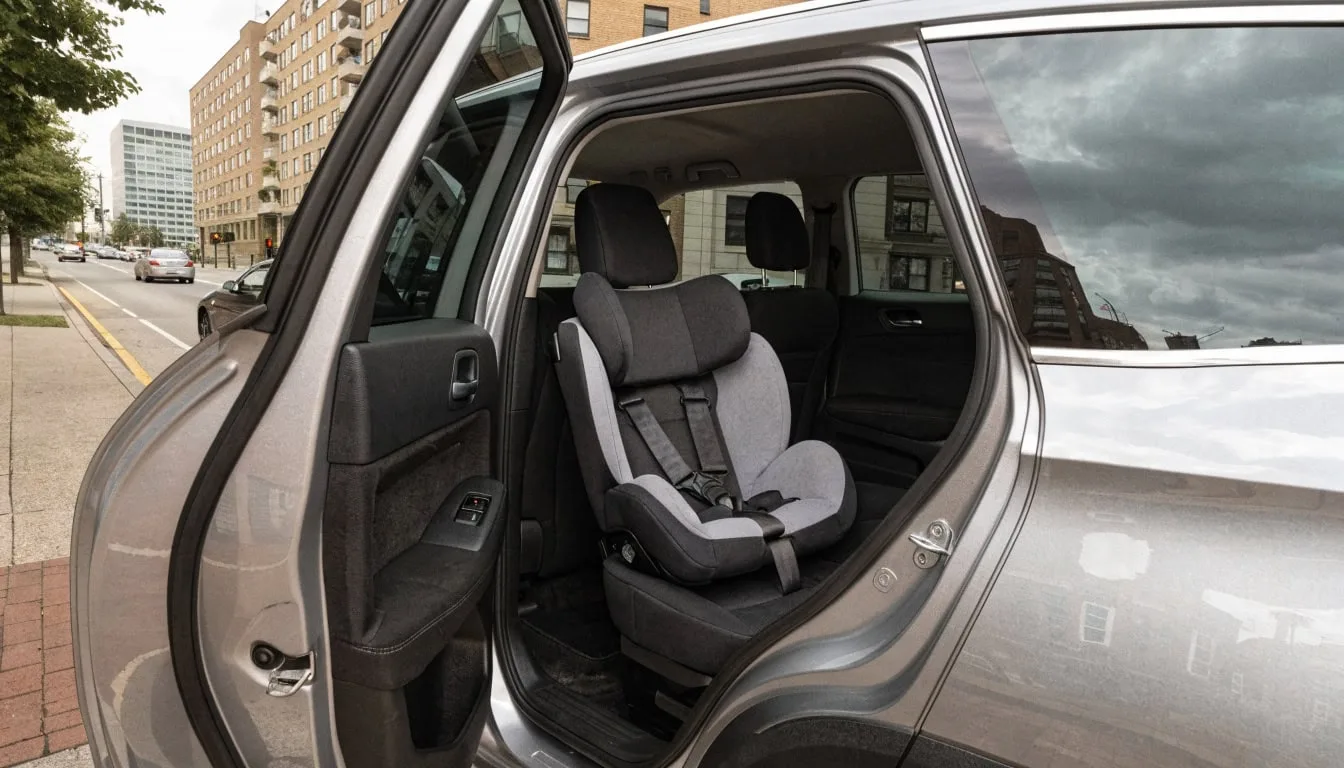
Michigan car seat laws establish minimum legal requirements, but best practices from organizations like the American Academy of Pediatrics (AAP) and National Highway Traffic Safety Administration (NHTSA) go further to maximize child safety:
Rear-Facing as Long as Possible:
- AAP Recommendation: Keep children rear-facing until they reach the maximum height or weight limit of their convertible car seat, often age 3-4 or beyond
- Why: Rear-facing seats provide significantly better protection for head, neck, and spine in crashes
- Michigan Law: Now requires rear-facing until age 2, but the AAP recommends going well beyond that minimum
Many modern convertible car seats accommodate rear-facing up to 40-50 pounds, allowing most children to remain rear-facing well past their second birthday.
Forward-Facing with Harness:
- AAP Recommendation: After outgrowing rear-facing seats, keep children in forward-facing seats with 5-point harnesses until they reach the seat’s maximum height or weight limit, often age 5-7
- Why: Harnesses distribute crash forces across the strongest parts of the body (shoulders, hips, between the legs)
- Common mistake: Switching to boosters too early because children want to sit like older siblings
Booster Seats: The American Academy of Pediatrics recommends using booster seats until children are at least 4 feet 9 inches tall and between ages 8-12. Michigan law now requires boosters from age 5 until age 8 or 4’9″ height, whichever comes first. The reason for the AAP’s extended recommendation is that seat belts are designed for adults, and boosters position the belt correctly across strong bones rather than soft internal organs where injuries occur.
Regular Seat Belts: Before transitioning to seat belts alone, children should pass the comprehensive “5-step test” to ensure proper fit. Can they sit all the way back against the seat with good posture? Do their knees bend comfortably at the seat edge without sliding forward?
Does the shoulder belt cross the chest and collarbone area rather than the neck or face? Does the lap belt sit low across the hips and upper thighs rather than the stomach? Can they maintain this proper position for the entire trip without slouching?
Most children don’t pass this rigorous test until age 10-12, despite Michigan law allowing seat belt use at age 8.
Back Seat Until Age 13:
- Michigan’s updated law now requires children to ride in the rear seat if one is available. Safety experts universally recommend children under 13 ride in the back seat, away from front airbags that can cause serious injuries in crashes
Following best practices rather than just legal minimums can dramatically reduce your child’s injury risk. In crashes, properly restrained children have 71% lower death rates than unrestrained children.
Car Seat Types by Age, Height, and Weight
Understanding which car seat type your child needs requires considering age, height, and weight together, not just age alone.
Infant Car Seats (Rear-Facing Only):
- Age: Newborns to approximately 1 year (varies by child)
- Weight: Up to 22-35 pounds (depending on seat model)
- Height: Up to 29-35 inches
- Features: Handle for portability, often snap into stroller bases
- When to transition: When child reaches weight or height limit, or top of head is within one inch of seat top
Convertible Car Seats (Rear-Facing, Then Forward-Facing):
- Rear-facing mode:
- Age: Newborn to 3-5 years
- Weight: Up to 40-50 pounds
- Height: Varies by model
- Forward-facing mode:
- Age: 2-7 years (after outgrowing rear-facing limits)
- Weight: Up to 65-90 pounds
- Height: Varies by model
- Advantage: One seat serves multiple stages
- When to transition: From rear to forward-facing when child exceeds rear-facing limits; from forward-facing to booster when they exceed forward-facing limits
All-in-One Car Seats:
- Can be used rear-facing, forward-facing with harness, then as belt-positioning booster
- Provides longest use but may be bulkier
Forward-Facing-Only Car Seats (with Harness):
- Age: 2-7 years (must be at least 2 and have outgrown rear-facing)
- Weight: 20-90 pounds
- Height: Varies by model
- When to transition: When child reaches weight or height limit or shoulders exceed top harness slots
Booster Seats (Belt-Positioning):
- Age: 4-12 years
- Weight: 40-120 pounds
- Height: Until child is at least 4’9″ and passes 5-step test
- Types:
- High-back boosters: Provide head/neck support, better for vehicles without headrests
- Backless boosters: Appropriate once child’s ears are above vehicle seat back
- When to transition: When child is 4’9″ tall and passes 5-step seat belt fit test
Always follow the manufacturer’s instructions for your specific car seat model, as specifications vary.
Rear-Facing Requirements and Recommendations
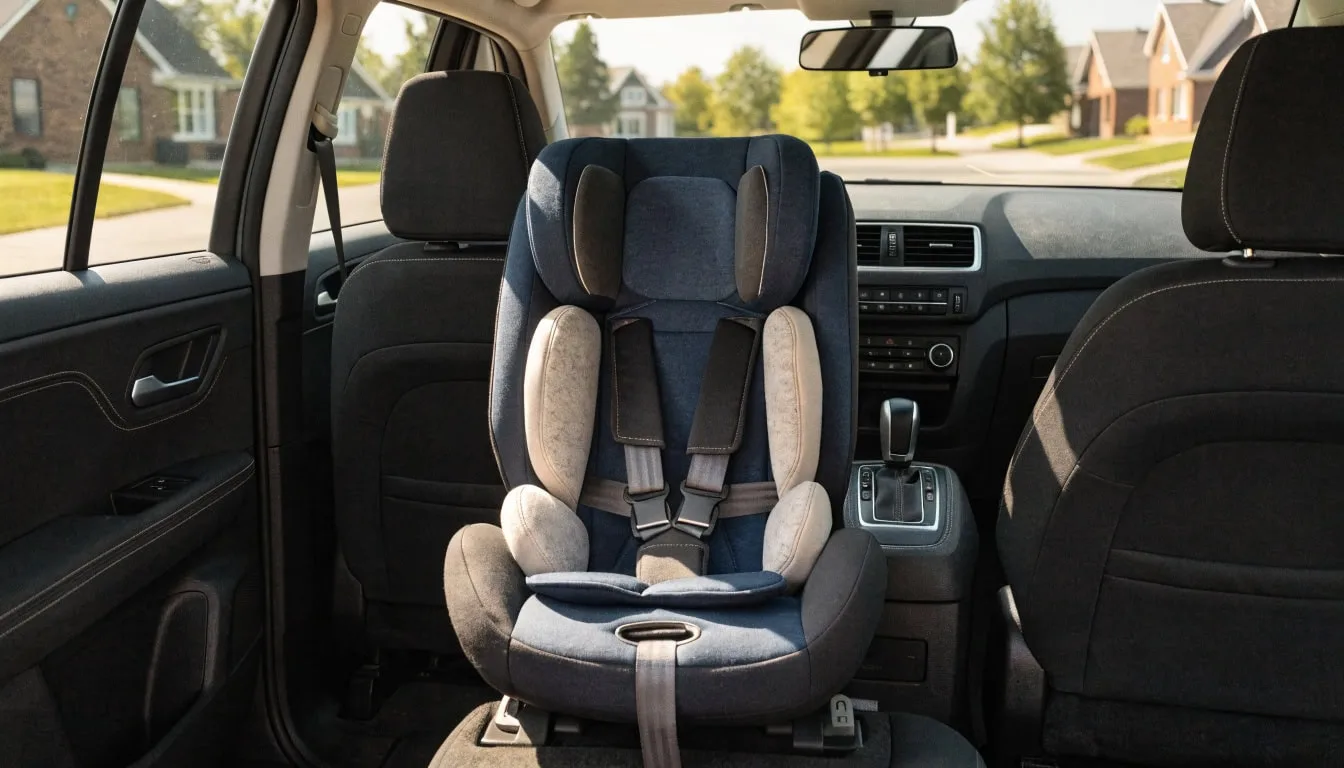
The shift toward extended rear-facing has been one of the most significant developments in child passenger safety, and Michigan’s 2025 law update finally codified a rear-facing requirement into state law.
Why Rear-Facing is Safer:
In frontal crashes (the most common type), rear-facing seats:
- Distribute crash forces across the entire back of the seat
- Support the head, neck, and spine as a unit
- Prevent the violent forward head movement that can cause spinal cord injuries
- Reduce forces on the neck by as much as 75% compared to forward-facing
Young children have proportionally larger, heavier heads on weak necks. In crashes, forward-facing positions allow the head to snap forward violently, potentially causing internal decapitation (separation of skull from spinal cord), which is often fatal or causes permanent paralysis.
Michigan Law and Rear-Facing:
As of April 2, 2025, Michigan car seat law now requires children to remain rear-facing until they reach the maximum weight or height limit of their car seat or until age 2, whichever comes first. This is a significant improvement over the previous law, which did not specify rear-facing duration. The law also requires following manufacturer instructions, and nearly all convertible car seats are designed for extended rear-facing well beyond age 2.
AAP Recommendation:
The American Academy of Pediatrics recommends children remain rear-facing until age 2 at minimum, and ideally until they reach their car seat’s maximum rear-facing weight or height limit, often age 3-5. Michigan law now aligns with the AAP’s minimum recommendation of age 2.
Common Concerns About Rear-Facing:
Parents often worry when they see their toddler’s legs bent in a rear-facing seat, but children’s bones and joints are far more flexible than adults’. Those bent knees don’t cause discomfort or increase injury risk. In fact, leg injuries in crashes are minor compared to the catastrophic head and neck injuries prevented by rear-facing positioning.
When children express a desire to see forward rather than backward, remember that safety must outweigh preferences. Simple solutions like toys, rear-view mirrors allowing them to see you, or distractions can keep children content facing backward. Some parents worry about carsickness from rear-facing, but true rear-facing motion sickness is actually quite rare.
If it occurs, try adjusting the seat angle, ensuring good ventilation in the vehicle, or consulting your pediatrician about solutions.
How to Know When to Turn Forward-Facing:
Turn your child forward-facing only when they exceed the rear-facing weight OR height limit specified by your car seat manufacturer (whichever comes first), AND they are at least age 2. Under Michigan’s current law, this is not just a recommendation; it is a legal requirement.
Booster Seat Requirements and Transition
Understanding when to transition to and from booster seats protects children during crucial developmental years.
When to Move to a Booster:
Transition from forward-facing harness seat to booster when:
- Child exceeds the weight or height limit of the forward-facing seat
- Child’s shoulders are above the highest harness slot position
- Child’s ears are above the top of the seat back
Never move to a booster based on age alone if the child still fits their harnessed seat.
When to Stop Using a Booster:
Michigan law requires booster seats starting at age 5 (after outgrowing the forward-facing harness stage) and allows children to stop using boosters at age 8 or when they reach 4 feet 9 inches tall (whichever comes first).
- Are at least 4’9″ tall (usually age 10-12)
- Pass the 5-step seat belt fit test
- Can maintain proper position throughout the ride
Booster Seat Safety Tips:
- Always use with both lap and shoulder belts (never lap-only belts)
- Never tuck shoulder belts under arms or behind backs (defeats the purpose and increases injury risk)
- Position lap belt low across hips/thighs, not across stomach
- Position shoulder belt across chest/shoulder, not across neck or face
- Ensure children don’t slouch (reduces protection)
Premature booster removal is among the most common and dangerous mistakes parents make. In crashes, seat belts designed for adults can cause severe internal injuries to children whose bones and organs aren’t fully developed.
Violations and Penalties
Michigan car seat law violations can result in civil infractions, fines, and points on your driving record.
Penalties for Car Seat Violations:
Violating **MCL 257.
- Fine: Civil infraction subject to fines (typically $10 to $20 plus court costs, though total costs can be higher)
- Primary Enforcement: Under the updated law, police can stop a vehicle solely for a car seat violation without another traffic infraction occurring
- No Points: Car seat violations do not add points to your driving record
- No Jail Time: Violations carry no jail time, community service, or license suspensions
- May Waive Fine: Some courts waive fines if you provide proof you have obtained and installed an appropriate car seat
Penalties for Child Unrestrained:
If a child is completely unrestrained (no car seat or seat belt), penalties are more severe and may be classified differently.
Additional Consequences:
Beyond legal penalties, improper restraint can:
- Affect insurance claims: If your improperly restrained child is injured, insurance companies may argue contributory negligence, reducing compensation
- Result in criminal charges: If improper restraint contributes to serious injury or death, criminal charges (child endangerment, negligent homicide) may be filed
- Trigger Child Protective Services involvement: In severe cases or with repeated violations
The legal penalties pale in comparison to the consequence that truly matters: your child’s safety. Proper restraints reduce child death risk by 71% and serious injury risk by 69%.
How Improper Restraints Affect Personal Injury Claims
If the unthinkable happens and your child is injured in an accident, how they were restrained can significantly affect legal claims for compensation.
Impact on Your Claim:
Comparative Negligence: Michigan follows modified comparative negligence rules (MCL 600.2959). If your child was improperly restrained, defendants may argue you contributed to the injuries.
- Reduce your compensation by your percentage of fault
- Bar recovery of non-economic damages entirely if you are found 51% or more at fault
Example: If damages are $500,000 but a jury finds you 30% at fault for having a forward-facing child who should have been rear-facing, your recovery reduces to $350,000.
Causation Disputes: Insurance companies will argue improper restraints caused or worsened injuries, even when the other driver was clearly at fault for the accident. Expert testimony becomes crucial to establish what injuries would have occurred regardless of restraint type.
Increased Defense Aggressiveness: When children are injured, insurance companies already defend claims aggressively. Improper restraints give them additional ammunition to reduce payouts.
Documentation Importance:
After any accident involving children:
- Photograph car seat installation and damage
- Note car seat specifications (make, model, weight/height limits)
- Preserve the car seat for potential expert examination
- Document child’s measurements (height and weight)
- Obtain witness statements about the accident (not restraint usage)
When Defendants Are at Fault for Restraint Issues:
Sometimes car seat failures, defects, or installation errors aren’t the parent’s fault:
- Defective car seats: Manufacturers may be liable if seats fail or break in crashes
- Defective vehicles: Vehicle seat belt or LATCH system defects can prevent proper installation
- Third-party installation: If someone else installed the seat improperly (mechanics, daycare providers), they may share liability
At The Joseph Dedvukaj Firm, we’ve represented families whose children were injured in accidents.
We understand the complexity of these cases and work with child safety experts and medical professionals to establish appropriate care standards and counter improper defense arguments.
Common Car Seat Mistakes to Avoid
Even well-intentioned parents make mistakes that compromise child passenger safety:
Transitioning Too Early: Moving to the next seat type before children outgrow current seats based on age rather than height/weight limits.
Loose Installation: Car seats should move less than one inch side-to-side or front-to-back at the belt path. Loose installation reduces protection by up to 50%.
Incorrect Harness Fit:
- Harness straps should be snug (you can’t pinch excess webbing at the shoulder)
- Chest clip should be at armpit level
- Rear-facing: Harness straps at or below shoulders
- Forward-facing: Harness straps at or above shoulders
Bulky Coats: Winter coats create slack in harness systems, allowing children to slide out in crashes. Remove coats before buckling, then place coats backwards over buckled child.
Recalled Seats: Using recalled car seats puts children at risk. Register seats at purchase and check for recalls at NHTSA. gov.
Expired Seats: Car seats expire 6-10 years after manufacture (varies by model). Expired seats may have weakened plastic or outdated safety standards.
Using Second-Hand Seats: Only use second-hand seats if you know the full history (never in any accident, not expired, not recalled, have instructions and all parts).
Seats in Front Seat: Never place rear-facing seats in front of active airbags. Front seats generally should be avoided for all children under 13.
Incorrect LATCH Use: Lower Anchors and Tethers for Children (LATCH) systems have weight limits (usually 65 pounds total including child + seat). Beyond this, use seat belt installation.
Get Help from Experienced Michigan Personal Injury Lawyers
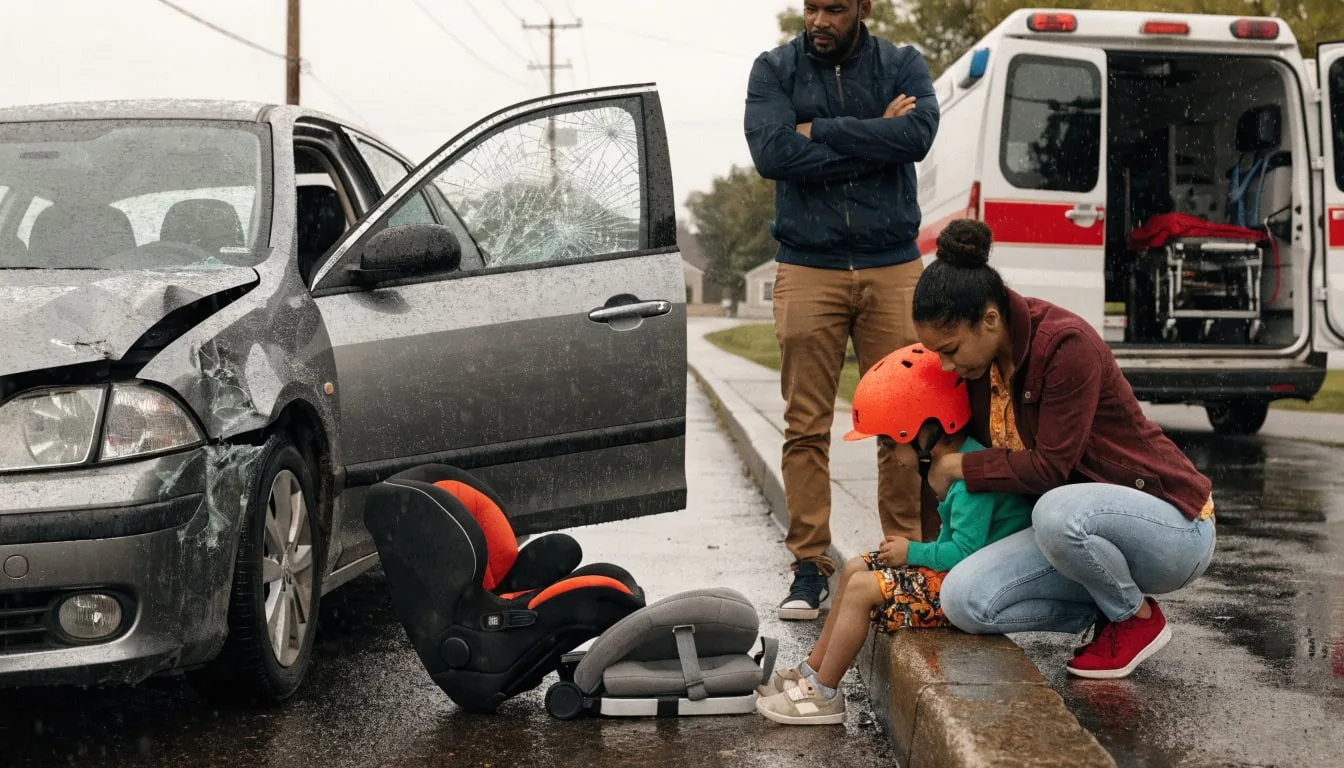
Following Michigan car seat laws and best practices dramatically reduces injury risk, but accidents still happen. If your child has been injured in an accident, regardless of how they were restrained, you need experienced legal representation to protect their rights and secure compensation for medical care, pain and suffering, and future needs.
The Joseph Dedvukaj Firm has represented injured Michigan children and families for over 30 years, securing over $350 million in recoveries.
We understand the emotional devastation of childhood injuries and fight aggressively for compensation addressing both immediate and long-term needs.
When children are catastrophically injured, compensation must cover:
- Lifetime medical care and rehabilitation
- Special education and support services
- Future lost earning capacity
- Pain and suffering
- Loss of normal childhood experiences
- Parental lost wages for caregiving
- Home and vehicle modifications
These cases require sophisticated legal work including life care planning, economic analysis, and expert medical testimony. Our firm has the experience and resources to handle even the most complex childhood injury cases.
We work on a contingency fee basis, meaning you pay nothing unless we win. Call 1-866-HIRE-JOE for a free consultation. If your child has been injured, time is critical for preserving evidence and protecting their rights.
Beyond representing injured families, we’re committed to child safety education. Properly installed car seats save lives. If you need help with car seat installation, many Michigan fire departments, police stations, and hospitals offer free car seat inspection and installation assistance.
The NHTSA website provides a car seat inspection station locator.
Protect your most precious cargo. Follow Michigan car seat laws, exceed them with best practices, and if the worst happens, contact The Joseph Dedvukaj Firm to fight for your child’s future. Learn more about our wrongful death and child injury case experience on our website.