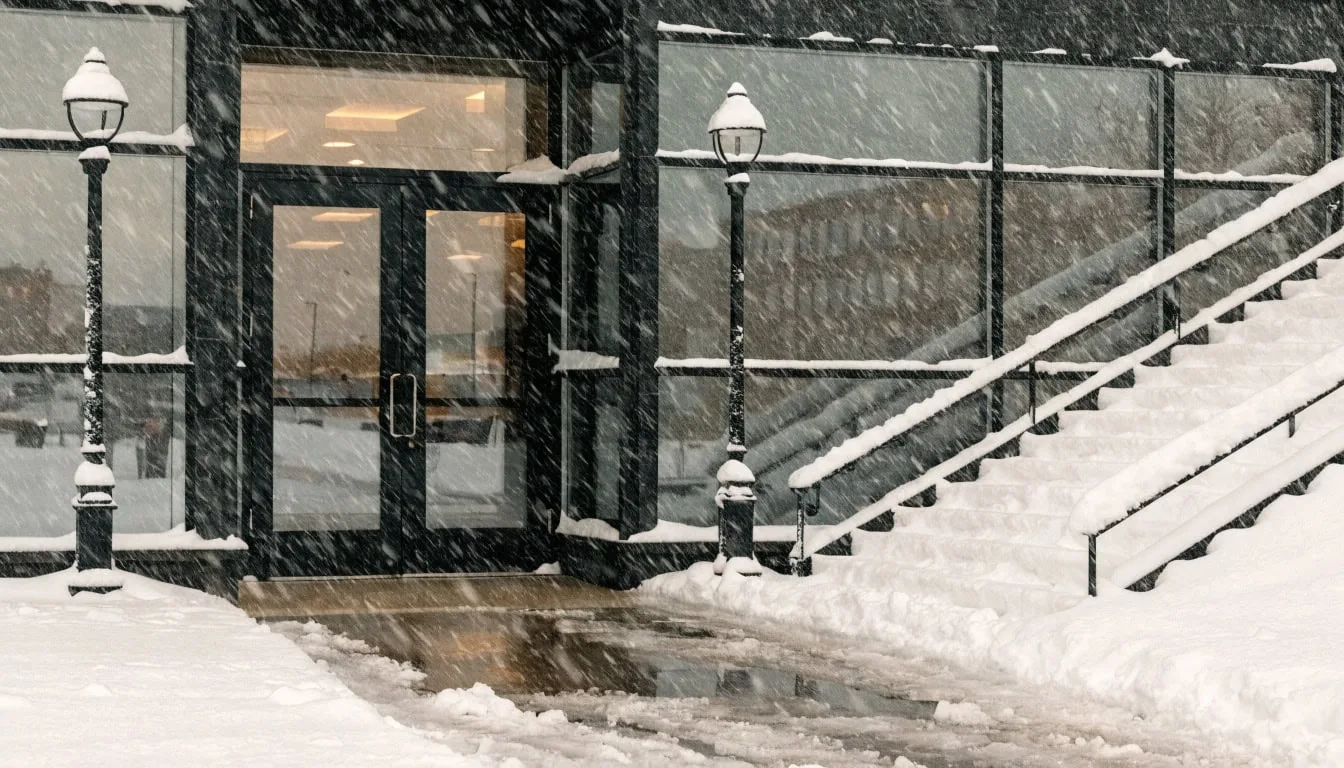
You were walking across the parking lot of a shopping center when your feet slipped on black ice, sending you crashing down onto the pavement. The fall resulted in a fractured hip requiring surgery, months of painful recovery, and time off work. When you contacted the property owner about compensation, they claimed Michigan’s harsh winter weather makes ice “unavoidable” and that you should have been more careful.
Their insurance company is denying your claim citing the “open and obvious doctrine,” arguing that everyone knows ice exists in Michigan winters and property owners aren’t liable for natural accumulations. You’re frustrated. The parking lot hadn’t been salted despite the store being open for business, but you’re being told you have no case.
You wonder: Are Michigan property owners really immune from liability for slip and fall accidents on ice and snow? What role does the open and obvious doctrine still play? Can a Michigan slip and fall lawyer help you recover compensation despite winter weather?
Michigan slip and fall cases involving ice and snow present unique challenges. However, a landmark 2023 Michigan Supreme Court ruling fundamentally changed the legal landscape in favor of injured victims. The court’s decision in *Kandil-Elsayed v.
F&E Oil, Inc. * eliminated the open and obvious doctrine as an automatic bar to recovery, shifting it instead into the comparative fault analysis. Property owners now face greater accountability for maintaining safe conditions.
Understanding Michigan’s updated premises liability law for winter hazards, how the open and obvious defense now works, how to prove negligence, and why experienced slip and fall attorneys are essential helps injured victims secure fair compensation for serious winter fall injuries.
Michigan’s Open and Obvious Doctrine: What Changed in 2023
The open and obvious doctrine historically created significant barriers for slip and fall victims. However, a landmark 2023 Michigan Supreme Court decision fundamentally reshaped how this defense works.
The Old Rule (Before July 2023):
For decades, Michigan law held that property owners owed no duty to protect or warn visitors about hazards that were “open and obvious,” meaning dangers readily apparent to reasonable people. If a judge determined a hazard was open and obvious, the case could be dismissed entirely before ever reaching a jury. This was devastating for winter slip and fall victims because courts routinely treated ice and snow as open and obvious conditions in Michigan.
**The Landmark Change: Kandil-Elsayed v. F&E Oil, Inc.
On July 28, 2023, the Michigan Supreme Court issued a groundbreaking 5-2 decision in Kandil-Elsayed v. F&E Oil, Inc. and *Pinsky v.
Kroger Co. of Mich. * that overturned three decades of premises liability precedent.
The court ruled that the open and obvious nature of a hazard no longer eliminates the property owner’s duty of care. Instead, whether a condition was open and obvious is now considered as part of the comparative fault analysis, which is a question for the jury to decide.
What This Means for Slip and Fall Victims:
This ruling is a significant victory for people injured on icy or snowy property. Under the new framework, a judge can no longer automatically dismiss your case simply because ice is a common winter hazard. The open and obvious nature of the condition may reduce your recovery through comparative fault, but it is no longer an absolute bar to compensation.
Property owners can still argue that you share some fault for not being more careful, but that argument goes to the jury rather than resulting in an early case dismissal.
How the Open and Obvious Defense Still Applies:
While the doctrine is no longer an automatic defense, the concept still matters in litigation. Property owners and their insurers will argue that the obvious nature of ice and snow should be weighed against the victim as comparative fault. For example, a jury might find a property owner 70% at fault for failing to salt a parking lot and the victim 30% at fault for not watching their step.
The victim would then recover 70% of their total damages. The key difference is that victims now get their day in court rather than having cases dismissed at the summary judgment stage.
Experienced slip and fall lawyers leverage this favorable legal change to pursue strong claims against property owners who fail to maintain safe winter conditions, arguing that comparative fault should fall primarily on the negligent property owner rather than the injured victim.
Property Owner Snow and Ice Removal Duties
Michigan property owners have responsibilities for winter maintenance that extend beyond simply acknowledging that Michigan experiences harsh winters.
Duty to Maintain Reasonably Safe Premises:
Michigan law imposes a general duty on property owners to keep their premises in reasonably safe condition for visitors. This includes warning guests of non-obvious dangers and taking reasonable steps to eliminate hazards that could cause injuries. When it comes to winter weather conditions, property owners have specific responsibilities that create liability when breached.
Property owners must actively monitor both weather conditions and their property to identify ice and snow hazards as they develop. They’re required to remove snow and ice within a reasonable time after accumulation, recognizing that “reasonable” depends on factors like storm severity and business hours. Salting or sanding walking surfaces provides necessary traction on potentially slippery areas where complete ice removal isn’t immediately achievable.
When complete removal isn’t immediately practical, posting clear warnings becomes essential to alert visitors to continuing dangers. Most importantly, property owners must provide safe paths for ingress and egress. Customers shouldn’t have to navigate obstacle courses of ice and snow to access businesses they’re invited to patronize.
“Reasonable Time” for Removal:
Property owners are not required to eliminate ice and snow instantly as if they possess magical powers. During storms actively in progress, owners aren’t expected to keep up with continuously falling snow, as that would be practically impossible. After storms end, however, property owners must address accumulations within a reasonable timeframe.
When overnight ice formation occurs, owners have a reasonable time after businesses open to address hazards before customers arrive.
What constitutes “reasonable” time depends on multiple factors including storm severity and duration affecting how quickly removal can be accomplished, property type with commercial businesses held to higher standards than residential properties, time elapsed since the storm ended providing opportunities for remediation, and normal business practices in the area establishing community standards for winter maintenance.
**Artificial vs.
Natural accumulations refer to snow and ice resulting directly from weather without property owner contribution. Artificial accumulations involve ice or snow created or worsened by property owner actions rather than weather alone.
Examples of artificial accumulations include ice formation from roof drainage or downspouts channeling water that refreezes into hazardous ice patches. Snow piled carelessly creates hazardous mounds blocking safe passage or creating unstable walking surfaces. Ice formed from improper drainage where water pools and freezes due to grading or drainage system failures qualifies as artificial.
Refreezing after initial melting from building heat creates ice where natural conditions alone wouldn’t have caused accumulation.
Property owners have substantially greater liability for artificial accumulations they created through their own actions or property design failures, since these hazards result from owner conduct rather than purely natural weather.
**Parking Lot vs.
Parking lots owned by property create clear responsibilities where property owners are responsible for complete maintenance including plowing, salting, and addressing ice formation. Commercial properties particularly are expected to maintain customer safety in parking areas customers must use to access businesses.
Public sidewalks adjacent to properties present more complex liability questions. Municipal ordinances may require adjacent property owners to clear public sidewalks in front of their properties. Liability may rest with property owners, municipalities, or both depending on local ordinances and circumstances.
Investigation into local law and maintenance practices is required to determine which party bears responsibility for any particular sidewalk.
At The Joseph Dedvukaj Firm, we thoroughly investigate winter slip and fall cases to determine whether property owners met their maintenance obligations and whether exceptions to the open and obvious doctrine apply to overcome initial defense positions.
Common Winter Slip and Fall Scenarios
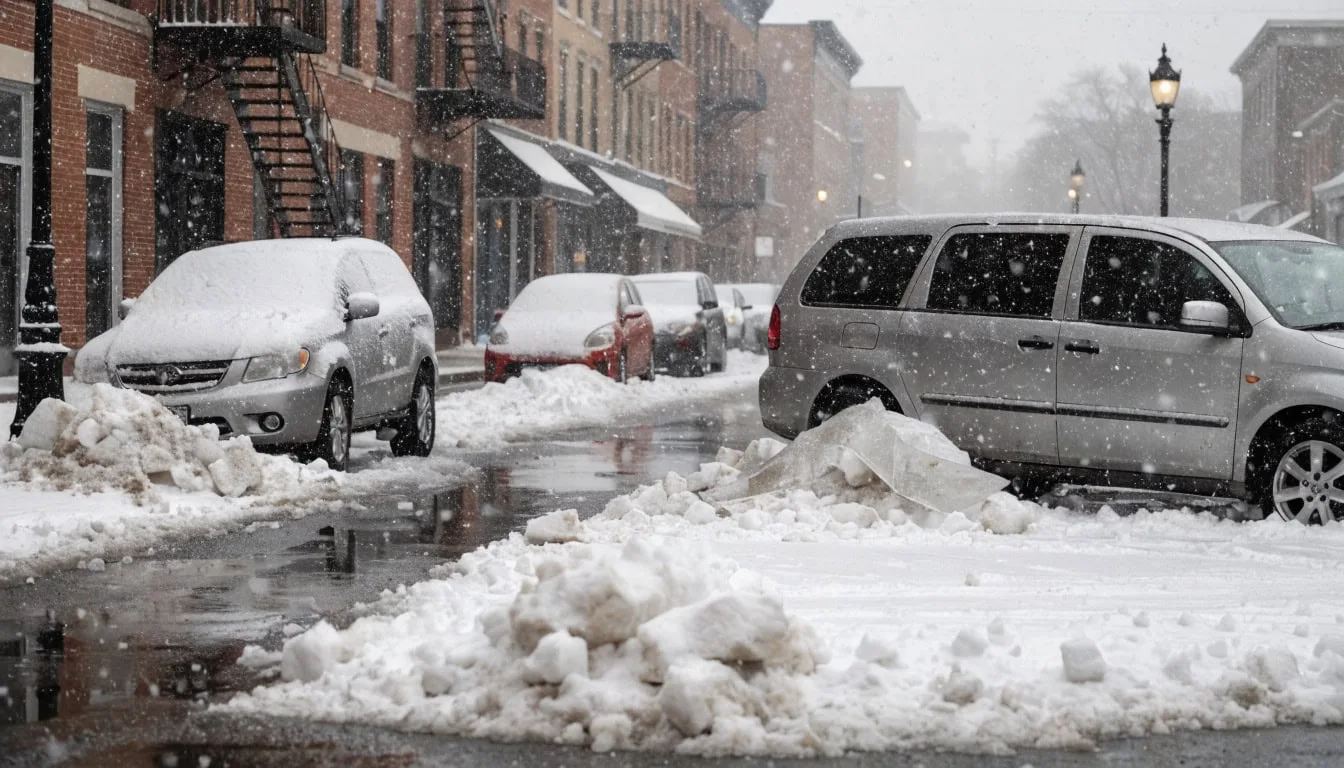
Michigan winter accidents follow predictable patterns that experienced attorneys recognize and know how to prove.
Black Ice in Parking Lots:
Black ice represents the most dangerous winter condition because transparent ice proves extremely difficult to see against dark pavement. It forms overnight as temperatures drop after daytime melting, or through refreezing of melted snow. The hazard becomes especially dangerous in shaded areas where sunlight never reaches to melt ice even on warmer days.
Property owners often fail to salt parking lots adequately, leaving dangerous conditions unaddressed.
Liability factors in black ice cases center on whether the lot was salted after ice formed, whether the property owner knew or should have known ice was present through reasonable inspection, whether other customers had fallen in the same location creating actual notice, and whether warnings were posted alerting visitors to continue dangers.
Entrance and Exit Steps:
High-traffic areas at building entrances require extra care because customer volume and business necessity make encounters unavoidable. Ice accumulation occurs from foot traffic repeatedly melting and refreezing as customers track moisture indoors. Roof drainage creating ice directly at entrances represents artificial accumulation.
Inadequate handrails fail to provide support when customers inevitably encounter ice at entrances they must use.
The effectively unavoidable exception often applies because customers must use entrance steps despite any ice present, as they have no alternative means to access the business.
Sloped Parking Lots:
Gravity creates extreme danger when ice forms on slopes. Ice on inclines becomes extraordinarily hazardous because gravity pulls victims downward as they slip. Falls prove more severe due to momentum gained sliding down slopes.
Property owners owe special duties to address slopes promptly given the heightened danger compared to level surfaces.
Sidewalks Not Cleared:
Paths to businesses that remain uncleared create liability through uncleared snow that becomes packed into slippery ice from foot traffic. Snow piles from plowing block safe paths and force customers into dangerous icy areas. Clearing failures force customers into roadways or other hazardous locations to reach business entrances.
Loading Docks and Rear Entrances:
Employee injury areas behind businesses often receive less attention than customer-facing areas. Loading docks and employee entrances are frequently neglected compared to customer entrances despite employers owing equivalent duties to employees. Workers’ compensation plus third-party premises liability may both apply when employees suffer injuries from property owner negligence at their workplace.
Inadequate Lighting:
Darkness concealing hazards creates liability when ice remains invisible in dim lighting conditions. Winter’s early darkness increases risk as customers arrive and depart during twilight and nighttime hours. Property owners must provide adequate lighting allowing visitors to see and avoid ice hazards that would be apparent in daylight.
Proving Property Owner Negligence
Successful winter slip and fall claims require strong evidence overcoming defense arguments and establishing clear liability.
Documenting the Accident:
Taking immediate steps to document your fall can make or break your case. Start by photographing everything: the specific ice conditions where you fell showing texture, color, and extent, the complete absence of salt or sand demonstrating maintenance failures, inadequate lighting that concealed the hazard from reasonable observation, and the entire surrounding area showing the scope of the problem beyond just your fall location. File an incident report with the property owner or manager immediately, creating an official record acknowledging that the fall occurred on their property.
Obtain contact information from anyone who witnessed your fall or the dangerous conditions, as their testimony may prove crucial when property owners deny hazards existed. Document recent weather and temperature data that created the ice conditions through weather service records establishing when ice would have formed. Most importantly, seek immediate medical evaluation that links your injuries directly to the fall, establishing causation through contemporaneous medical documentation.
Remember that delay means lost evidence in winter slip and fall cases. Ice melts as temperatures rise throughout the day. Weather conditions change within hours as new snow covers evidence or melting eliminates proof.
Property owners may salt the area immediately after your fall, destroying evidence of prior negligence. Witnesses’ memories fade quickly as the incident becomes less vivid over days and weeks.
Proving Property Owner Knowledge:
Liability requires showing owners knew or should have known about ice through either actual or constructive notice. Actual notice proves owners actually knew ice was present through prior complaints or fall reports from other customers, direct employee observations of ice formation, or management awareness documented through emails, maintenance logs, or testimony.
Constructive notice establishes that ice existed long enough that reasonable inspection would have discovered it by examining how long elapsed since last documented inspection, how much time passed since the storm that created ice ended, and patterns of ice formation in specific locations suggesting that reasonable owners would anticipate hazards.
Establishing Breach of Duty:
Evidence showing owners failed to maintain properties safely includes proving no salt or sand was applied despite ice presence and adequate time for remediation. Inadequate snow removal leaving dangerous accumulations demonstrates maintenance failures. Failure to inspect after weather events shows owner did not monitor conditions as reasonable property managers must.
Lack of warnings when ice was present and removal wasn’t immediately practical proves failure to alert visitors to known dangers. Prior falls in the same location that weren’t addressed with improved maintenance establish that owners knew hazards existed but failed to remedy them.
Comparing to industry standards strengthens cases by showing similar businesses’ practices in winter maintenance exceed the defendant’s efforts. National safety standards for winter maintenance published by industry groups establish best practices owners should follow. Local ordinances requiring specific actions create minimum standards that owners must meet by law.
Expert Testimony:
Slip and fall experts provide critical testimony regarding reasonable property maintenance standards establishing what prudent owners should do, expected snow and ice removal procedures in Michigan’s climate, whether the specific owner’s actions were adequate under the circumstances, and causation explaining how the specific hazard directly caused your specific injuries.
Minimizing Comparative Fault from Open and Obvious Arguments:
Attorneys counter comparative fault arguments by showing ice was particularly dangerous beyond normal conditions through concealment or accumulation. Proving hazards were effectively unavoidable demonstrates no alternative path existed to access the business, reducing victim fault. Establishing foreseeable harm shows the owner should reasonably have expected falls.
Documenting distractions explains how property features drew attention away from ice hazards, shifting fault toward the property owner.
Medical Documentation:
Proving injuries resulted from your fall requires comprehensive emergency room records documenting immediate post-fall treatment. Fracture documentation through X-rays and radiology reports establishes serious injury. Surgery records prove injury severity requiring surgical intervention.
Physical therapy documentation shows extended rehabilitation needs. Expert medical testimony links specific injuries to fall mechanisms and forces.
Damages in Michigan Winter Slip and Fall Cases
Compensation depends on injury severity and the strength of liability proof overcoming open and obvious defenses.
Economic Damages:
Medical expenses encompass emergency room treatment for initial evaluation and stabilization, hospitalization when injuries require inpatient care, surgical procedures to repair fractures or other trauma, physical therapy throughout extended rehabilitation, and projections of future medical care for permanent injuries. Lost wages compensate income lost during recovery periods when injuries prevent working entirely or require reduced schedules. Lost earning capacity addresses permanent injuries affecting long-term work ability and career advancement when victims cannot return to previous employment or suffer reduced earning potential.
Non-Economic Damages:
Pain and suffering compensates physical pain from injuries during acute phases and ongoing discomfort. Permanent impairment recognizes lasting limitations affecting daily activities and quality of life indefinitely. Loss of enjoyment addresses inability to engage in recreational activities and hobbies victims previously enjoyed.
Emotional distress compensates psychological trauma from the fall itself and stress endured during extended recovery periods.
Typical Settlement Ranges:
Winter slip and fall settlements vary dramatically based on injury severity and the strength of your liability case. Minor injuries like sprains and bruises that heal within weeks typically settle for $5,000-$25,000 when liability is clear. Moderate injuries including fractures that don’t require surgical intervention generally result in settlements of $25,000-$75,000 accounting for medical expenses and temporary disability.
Serious injuries involving fractures requiring surgery, extended recovery periods, and permanent limitations push settlements into the $75,000-$300,000 range when liability can be established. Severe injuries such as hip fractures requiring replacement surgery, spinal injuries causing lasting impairment, or traumatic brain injuries can command settlements of $300,000-$1,000,000 or more depending on the permanence of disabilities and how effectively comparative fault arguments are countered.
Multiple factors beyond just medical bills affect settlement value. Injury severity and permanence form the foundation of damages calculations, but the strength of your liability evidence proving property owner negligence proves equally crucial. How effectively you counter comparative fault arguments about the open and obvious nature of ice conditions significantly affects your recovery amount.
The property owner’s available insurance coverage may cap practical recovery even when damages theoretically exceed policy limits. Finally, any comparative negligence attributed to you reduces your recovery proportionally under Michigan’s modified comparative fault system, making it essential to counter defense arguments effectively.
Comparative Negligence:
Michigan’s modified comparative negligence rule reduces your recovery by your percentage of fault. If you’re found more than 50% at fault, you recover nothing under Michigan law’s harsh cutoff.
Property owners predictably argue you should have seen the ice if you were watching where you walked, you should have walked more carefully given Michigan’s winter climate, and you should have avoided the area entirely upon seeing potential hazards. Attorneys counter these arguments with evidence of property owner failures creating unreasonable hazards, proof that ice conditions were effectively unavoidable, and expert testimony establishing that even careful victims would have fallen given specific conditions present. Since the 2023 ruling, these arguments go to the jury as comparative fault questions rather than resulting in automatic case dismissal.
Get Help from Experienced Michigan Personal Injury Lawyers
Michigan winter slip and fall cases have become significantly more recoverable since the Michigan Supreme Court’s 2023 decision eliminating the open and obvious doctrine as an automatic bar to claims. With experienced legal representation proving property owner negligence and minimizing comparative fault arguments, victims now have stronger paths to compensation than ever before.
The Joseph Dedvukaj Firm has extensive experience with Michigan premises liability cases, including complex winter ice and snow falls where we’ve overcome seemingly insurmountable defenses. We understand how to leverage the 2023 changes to Michigan’s open and obvious doctrine, minimize comparative fault arguments through thorough evidence, prove property owner maintenance failures through expert testimony and industry standards, and maximize compensation by documenting all damages comprehensively.
Attorney Joseph Dedvukaj’s AV Preeminent rating and National Trial Lawyers: Top 100 membership demonstrate exceptional legal skill recognized by fellow attorneys and the judiciary. Our firm’s track record includes over $350 million recovered for Michigan injury victims across all case types, with substantial recoveries in premises liability cases where we’ve secured six-figure settlements for clients injured on improperly maintained properties.
When you choose The Joseph Dedvukaj Firm, you receive immediate evidence preservation through on-site investigation documenting conditions before they change. We retain qualified expert witnesses who prove property owner negligence through testimony about maintenance standards and causation. Our attorneys leverage the 2023 legal changes to counter open and obvious comparative fault arguments, strengthening your position against the most common defense to winter fall claims.
We provide comprehensive damage documentation calculating all economic and non-economic losses. We deliver aggressive advocacy against insurance company tactics designed to minimize or deny claims. You pay no upfront costs.
We work on a contingency fee basis where our fees come only from settlements or verdicts we secure.
Don’t let property owners claim “ice is just part of Michigan winters” to deny your right to fair compensation. Michigan law now gives you a stronger path to holding negligent property owners accountable for injuries caused by their maintenance failures. Contact The Joseph Dedvukaj Firm today for a free consultation with no obligation where we’ll evaluate your case honestly and explain your legal options.
Call 1-866-HIRE-JOE or visit our website. We serve Michigan slip and fall victims from our Bloomfield Hills office, representing injured people throughout the state.
Time is critical. Evidence must be preserved immediately while ice conditions still exist for documentation, and Michigan’s three-year statute of limitations bars claims filed too late. Let experienced attorneys protect your rights and build the strongest possible case while you focus on medical recovery and rehabilitation from your injuries.
Your winter fall injuries deserve fair compensation. Let us fight for your rights.