



You were walking your dog down your residential street when a garbage truck backing out from a collection stop struck you, knocking you to the ground and causing serious injuries including a fractured pelvis and head trauma. The driver claims he didn’t see you, despite the truck being equipped with backup cameras and warning beepers. You’re learning that garbage truck accidents involve unique legal issues—the truck was operated by a private waste management company contracted by your city, creating questions about who’s liable. The insurance company is offering minimal compensation, citing “governmental immunity” and claiming you should have been more careful around collection vehicles. You wonder: Who’s responsible when garbage trucks cause accidents? Can cities hide behind immunity? How do you prove negligence when trucks claim “accidents happen” during collection operations?
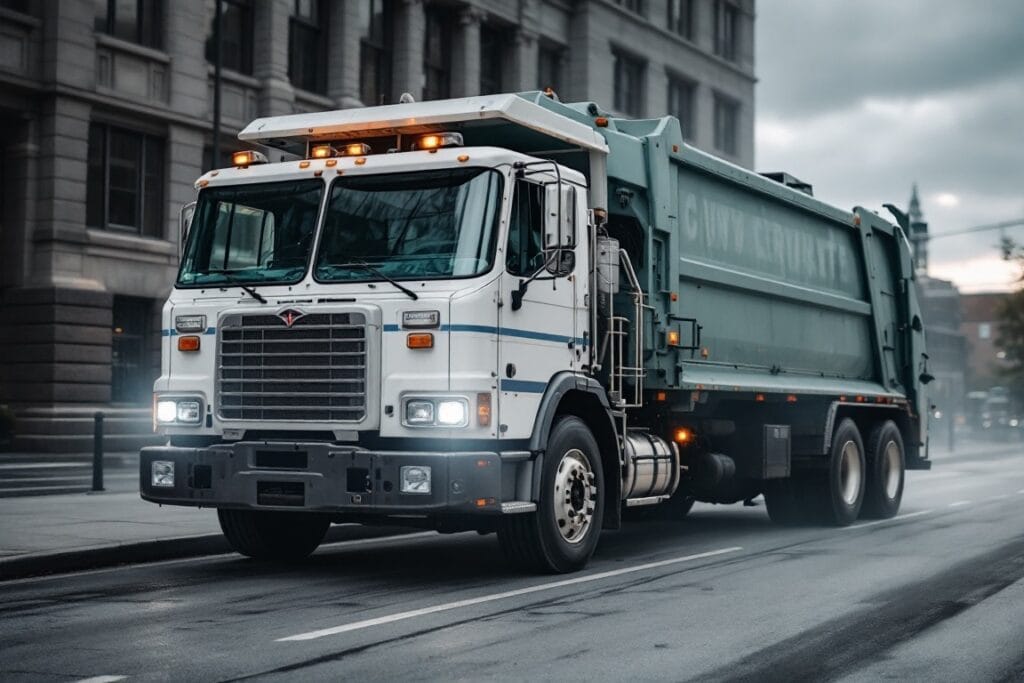
Garbage truck accidents cause devastating injuries to pedestrians, cyclists, and other vehicles due to these trucks’ unique hazards—constant stopping and starting, backing maneuvers, workers on and off trucks, and operation in residential areas with children and pets. Liability can involve municipal governments, private hauling companies, or both, with complex governmental immunity issues affecting recovery options. Understanding garbage truck hazards, municipal versus private hauler liability, governmental immunity exceptions, common accident scenarios, and why specialized garbage truck accident lawyers are essential helps victims navigate these complex claims and secure fair compensation for serious injuries.
Unique Hazards of Garbage Trucks
Garbage trucks create dangers other commercial vehicles don’t encounter. The very nature of waste collection—frequent stops in residential neighborhoods, constant backing maneuvers, and unpredictable movements—makes these vehicles particularly hazardous to pedestrians, cyclists, and other drivers sharing the road.
Constant backing maneuvers represent the greatest hazard garbage trucks pose. Unlike most commercial vehicles that back up occasionally, garbage trucks must reverse into driveways and side streets, back up to pick up missed containers, and navigate narrow residential streets backward. These trucks may perform backing operations dozens or even hundreds of times per day, exponentially increasing the risk of accidents.
The backing danger is compounded by limited visibility challenges. Even with backup cameras and mirrors, blind spots remain extensive. Backup alarms, meant to warn pedestrians, often become background noise that residents tune out. Distracted pedestrians walking while checking their phones, children darting behind trucks to retrieve toys, and pets running free all contribute to backing accident risks. Parked cars along residential streets further obscure pedestrians from drivers’ views, creating deadly blind spots.
Frequent stops and starts create unpredictable movement patterns in traffic. Garbage trucks stop suddenly at collection points, pull away quickly to maintain schedules, and often double-park while collecting, forcing other vehicles to navigate around them. Following drivers unfamiliar with collection routes may rear-end stopped trucks, while pedestrians can be struck during unexpected stops at non-standard locations.
The presence of workers riding on trucks adds another layer of danger. “Hoppers” or “riders” cling to the back of garbage trucks, jumping on and off between stops and working in active traffic lanes. These workers create unpredictable hazards for other drivers who don’t expect people to suddenly appear from behind trucks. Worker injuries from falls or being struck by vehicles are tragically common, and workers have even been run over by their own trucks when they fall.
Massive blind spots surround garbage trucks, making it difficult for drivers to see pedestrians, cyclists, and smaller vehicles. Despite modern camera systems, blind spots persist directly behind trucks, on the right side where “right hook” turns occur, under and around truck sides, and in the front blind spot below the cab. Even the most careful driver faces visibility challenges that put vulnerable road users at risk.
The wide turning radius required by garbage trucks creates “squeeze play” accidents during right turns. Trucks swing wide into adjacent lanes, potentially striking cyclists in bike lanes, pedestrians in crosswalks, or smaller vehicles alongside. These turning accidents often trap victims between the truck and fixed objects like curbs or poles.
At The Joseph Dedvukaj Firm, we represent victims of garbage truck accidents, understanding the unique hazards these vehicles present and the complex liability issues involved. With over $300 million recovered for Michigan injury victims, we know how to build compelling cases against both municipal and private haulers.
Municipal vs. Private Hauler Liability

Determining who’s liable for your garbage truck accident depends critically on ownership and operation of the truck. This distinction affects every aspect of your case, from the legal procedures you must follow to the compensation you can recover.
Municipal garbage trucks operated by city or township employees face governmental immunity protections that can significantly limit recovery. Cities own these vehicles, and the drivers are government employees. Michigan’s Governmental Tort Liability Act may limit or entirely bar claims depending on the circumstances. Even when claims are allowed, strict notice deadlines require you to notify the government within 120 days for municipal governments or six months for state government. Miss these deadlines, and your claim is barred regardless of how strong your case may be. Additionally, damage caps often limit recovery to $500,000 per person, even for catastrophic injuries.
Private haulers like Waste Management, Republic Services, or GFL Environmental operate under standard negligence law without governmental immunity protections. These companies maintain substantial commercial insurance coverage, face no statutory damage caps, and are subject to Michigan’s conventional three-year statute of limitations. The procedural complexity is significantly lower, making it easier for victims to pursue full compensation.
The situation becomes more complex when cities contract with private haulers for collection services. Many Michigan municipalities no longer operate their own waste collection, instead contracting with private companies. This arrangement can create dual liability scenarios where both the private hauler and the municipality bear responsibility. The private hauler may be liable for driver negligence, maintenance failures, or inadequate training, while the municipality could face liability for requiring dangerous collection schedules, inadequate route planning, or failing to maintain safe roads at collection sites.
Investigating who’s responsible requires experienced attorneys to examine vehicle ownership, employment relationships, contract terms, maintenance obligations, and route control. Vehicle markings showing city logos versus private company names provide initial clues, but contracts and employment records determine true liability. Insurance policies must be identified to understand coverage available for your injuries.
Liability Comparison: Municipal vs. Private Haulers
| Factor | Municipal (City-Owned) | Private Hauler |
|---|---|---|
| Operation | City/township employees drive | Private company employees drive |
| Ownership | Government owns vehicles | Private company owns equipment |
| Governmental Immunity | May limit or bar claims | No immunity—standard negligence law |
| Notice Requirements | Strict deadlines (120 days municipal, 6 months state) | Standard three-year statute of limitations |
| Damage Caps | Limited recovery amounts (often $500,000 cap) | No statutory caps on damages |
| Procedural Complexity | Complex claim procedures, extensive hurdles | Conventional lawsuit procedures |
| Insurance Coverage | Often limited by governmental caps | Substantial commercial insurance coverage |
| Examples | Detroit DPW, city waste trucks | Waste Management, Republic Services, GFL |
Governmental Immunity Issues in Municipal Truck Accidents
When municipalities operate garbage trucks, governmental immunity creates significant complications for injury victims. Understanding Michigan’s Governmental Tort Liability Act (GTLA) and its exceptions is essential to recovering compensation.
The general rule under MCL 691.1407 grants governmental entities broad immunity from tort liability. This means that, by default, you cannot sue a city or township for injuries caused by government operations. However, the legislature recognized that absolute immunity would be unjust in certain situations, creating specific exceptions that allow claims under limited circumstances.
The highway exception under MCL 691.1402 provides the most important pathway for garbage truck accident victims. This exception allows claims when injuries occur on a highway—defined broadly to include public streets and roads—and result from the government’s failure to maintain the highway in reasonable repair. However, proving a highway exception claim requires showing the government had actual or constructive notice of the dangerous condition and failed to remedy it within a reasonable time. For garbage truck accidents, this exception might apply when dangerous road conditions combined with truck operations cause injuries, though the notice requirements often present difficult hurdles.
The motor vehicle exception under MCL 691.1405 allows claims when government employees negligently operate motor vehicles. Garbage truck drivers who speed through neighborhoods, back up without looking, run stop signs, or otherwise drive carelessly may create liability under this exception. However, the exception only applies to operational acts, not policy decisions about routes or schedules. Even when this exception applies, economic damages are typically capped at $500,000 per person, leaving victims with catastrophic injuries unable to recover full compensation for lifetime care needs.
Notice requirements create the most common pitfall for garbage truck accident victims pursuing municipal claims. You must provide written notice to the government within 120 days for municipal governments or six months for state agencies. The notice must specify the date, time, and location of the incident, describe the circumstances of the accident, detail injuries suffered, and state the amount of damages claimed. These notice requirements are strictly enforced—missing the deadline by even one day bars your claim forever, regardless of how strong your case or how severe your injuries.
Common Garbage Truck Accident Scenarios
Backing accidents represent the most common and deadly garbage truck accident scenario. Trucks reversing in residential neighborhoods strike pedestrians walking or jogging, children playing or waiting for school buses, cyclists, parked cars, and other vehicles. Liability in backing accidents depends on whether the driver checked backup cameras, used mirrors properly, employed spotters when required, ensured backup alarms functioned, and reversed at safe speeds. Even with all safety equipment functioning, driver inattention or rushing to meet schedules can lead to devastating consequences.
Right-turn “squeeze play” accidents occur when garbage trucks make wide right turns that trap cyclists in bike lanes, pedestrians in crosswalks, or smaller vehicles alongside the truck. These accidents result from drivers failing to check mirrors and blind spots before turning, making turns from the left lane to swing wide, or turning at excessive speeds. Victims caught in squeeze play accidents often suffer crushing injuries with catastrophic outcomes.
Falling debris from garbage trucks causes windshield damage, loss of vehicle control, and collisions as drivers swerve to avoid debris. Unsecured loads spill from trucks, mechanical failures drop contents onto roadways, and collection arms malfunction, releasing debris. These accidents demonstrate maintenance failures and improper loading procedures.
Worker-related accidents injure both garbage truck workers and other road users. Workers riding on trucks fall off and are struck by following vehicles or run over by their own trucks. Falls during loading operations cause serious injuries. These accidents often reflect inadequate safety training, pressure to work too quickly, and insufficient staffing that eliminates spotters.
Pedestrian and cyclist collisions occur frequently during collection operations in residential areas. Early morning darkness reduces visibility, distracted drivers near schools fail to see pedestrians, workers crossing streets create hazards, and trucks blocking sight lines hide pedestrians from other drivers’ views. Children waiting at bus stops during collection hours face particular danger.
Rear-end collisions happen when vehicles strike garbage trucks that stop suddenly for collections, double-park in traffic lanes, or fail to provide adequate warning lights or reflectors. While following drivers bear some responsibility for maintaining safe distances, garbage trucks have duties to warn other drivers of their presence and provide reasonable notice before stopping.
Proving Negligence in Garbage Truck Accident Cases
Garbage truck accident lawyers must establish liability through thorough investigation of multiple potential negligence sources. Driver negligence often forms the core of these cases, with drivers failing to check blind spots before backing, backing too quickly, not using spotters when required, or driving while distracted or fatigued. Long shifts and pressure to complete routes quickly lead to speeding through residential areas, running stop signs, and improper turning maneuvers. Evidence of driver negligence comes from witness testimony, traffic camera footage, truck camera recordings, driver statements, and employment records showing excessive hours worked.
Inadequate training creates company liability when haulers fail to properly train drivers in backing procedures, residential area operation, pedestrian awareness, equipment operation, and emergency procedures. Training records, driver qualification files, company policies, and OSHA safety requirements provide evidence of training deficiencies. Comparing the company’s training to industry standards demonstrates negligence when training falls short.
Maintenance failures causing equipment defects contribute to many accidents. Non-functional backup cameras, failed backup alarms, brake failures, lighting defects, and hydraulic system failures all represent maintenance negligence. Maintenance logs, inspection records, prior complaints or repairs, and expert mechanical inspections establish that the hauler knew or should have known about dangerous equipment conditions but failed to address them.
Company policies sometimes create danger by imposing unrealistic expectations on drivers. Excessive routes require speeding to complete, inadequate time for safe collection pressures drivers to skip safety procedures, and insufficient staffing eliminates the spotters needed for safe backing. Evidence from route assignments, time studies, driver testimony, and company communications demonstrates that policies prioritized profits over safety.
Expert testimony from waste management industry experts helps juries understand proper safety standards. These experts testify regarding industry standards for safe operation, proper backing procedures, training requirements, equipment maintenance standards, and route safety planning. Expert analysis of the accident demonstrates how the hauler’s conduct fell below accepted industry practices.
Compensation for Garbage Truck Accident Victims
Garbage truck accidents often cause serious injuries warranting substantial compensation. The combination of vehicle weight, backing accidents, and operation in pedestrian-heavy areas creates risks for catastrophic injuries including traumatic brain injuries, spinal cord damage, crush injuries, amputations, and fatalities.
Economic damages compensate victims for financial losses including medical expenses for emergency treatment, surgeries, and rehabilitation; lost wages during recovery; lost earning capacity when permanent injuries reduce work ability; and future medical care costs for ongoing treatment needs. These damages can reach into the millions for catastrophic injuries requiring lifetime care.
Non-economic damages address the human impact of injuries through compensation for pain and suffering, scarring and disfigurement from permanent visible injuries, loss of enjoyment of life activities, and emotional distress from trauma and anxiety. While harder to quantify than medical bills, non-economic damages often represent the largest component of garbage truck accident settlements.
Garbage Truck Accident Settlement Ranges:
| Injury Severity | Description | Typical Settlement Range |
|---|---|---|
| Moderate Injuries | Fractures, soft tissue requiring treatment | $75,000-$250,000 |
| Serious Injuries | Surgery required, extended recovery | $250,000-$750,000 |
| Catastrophic Injuries | TBI, spinal cord, amputations | $750,000-$5,000,000+ |
| Fatal Accidents | Wrongful death claims | $500,000-$5,000,000+ |
Injury severity drives settlement value, with more severe and permanent injuries warranting higher compensation. Clear liability evidence showing obvious negligence like backing without looking or equipment failures increases settlement value by making the hauler’s fault undeniable. Insurance coverage available affects recovery potential—private haulers typically maintain higher coverage limits than the statutory caps limiting municipal claims. Governmental immunity limitations may cap damages and create procedural hurdles for municipal cases. Comparative negligence reduces recovery when victims share fault for accidents, with compensation reduced by the victim’s fault percentage.
Get Help from Experienced Michigan Personal Injury Lawyers
Garbage truck accidents involve complex liability issues, governmental immunity questions, and serious injuries. Without experienced legal representation understanding waste management operations and governmental tort law, victims risk inadequate compensation or having claims dismissed on technical grounds. The 120-day notice deadline for municipal claims creates particular urgency—waiting even a few weeks to consult an attorney can result in losing all rights to compensation.
The Joseph Dedvukaj Firm has experience with commercial vehicle accidents including garbage trucks. We understand how to investigate these accidents, identify all liable parties, overcome governmental immunity defenses when applicable, and maximize compensation. Our firm has represented over 15,000 clients and recovered more than $300 million for Michigan injury victims.
Attorney Joseph Dedvukaj’s AV Preeminent rating and National Trial Lawyers: Top 100 membership demonstrate exceptional legal skill. We work on a no-win, no-fee contingency basis, meaning you pay nothing unless we recover compensation for you. Our immediate investigation preserves evidence before it disappears, liability determination identifies whether municipal or private haulers are responsible, governmental notice compliance meets strict deadlines, expert witnesses prove negligence, and comprehensive damage documentation maximizes your recovery.
Don’t let governmental immunity claims or insurance companies deny you fair compensation. Contact The Joseph Dedvukaj Firm today for a free consultation. Call 1-866-HIRE-JOE or visit our website. We serve Michigan garbage truck accident victims from our Bloomfield Hills office, representing clients throughout the state.
Time is critical—governmental notice deadlines as short as 120 days and Michigan’s three-year statute of limitations make immediate legal consultation essential. Let experienced attorneys protect your rights while you focus on medical recovery. We handle the legal complexity so you can concentrate on healing and rebuilding your life after a devastating garbage truck accident.