



The pain shoots down your leg every time you stand up. Your herniated disc diagnosis came after that rear-end collision three months ago, and while your doctor says surgery isn’t necessary yet, you’re living on pain medication and can barely make it through a workday. Physical therapy helps somewhat, but you’re not the same person you were before the accident. Insurance adjusters keep calling with settlement offers, but you have no idea if $15,000 or $50,000 is fair compensation for a back injury without surgery. You wonder: Does avoiding surgery mean your case isn’t worth much? What can you realistically expect for non-surgical back injury compensation?
The truth is that back injury settlements without surgery vary widely—from a few thousand dollars to well over $100,000—depending on numerous factors. While surgery often increases settlement values, many non-surgical back injuries result in substantial compensation when properly documented and presented. Understanding what affects your case’s value, how to maximize your claim, and when to accept or reject settlement offers is crucial to securing fair compensation for your suffering and losses.
Understanding Back Injuries That Don’t Require Surgery
Not all back injuries necessitate surgical intervention, but that doesn’t make them minor or insignificant. Many serious back injuries are treated conservatively (without surgery), yet cause chronic pain, permanent limitations, and life-altering consequences.
Common Non-Surgical Back Injuries:
Herniated Discs (Disc Protrusions): When the soft inner material of a spinal disc pushes through the tough outer layer, it can compress nerves causing severe pain, numbness, and weakness radiating into legs or arms. Many herniated discs respond to conservative treatment including physical therapy and targeted exercises strengthening supporting muscles, epidural steroid injections reducing inflammation around compressed nerves, pain medications and muscle relaxants controlling acute symptoms, and activity modifications avoiding movements that aggravate injuries. However, even without surgery, herniated discs can cause permanent impairment and chronic pain lasting years or even a lifetime.
Bulging Discs: Unlike herniated discs where material breaks through, bulging discs involve the disc extending beyond its normal boundary without rupturing. While often less severe than herniations, bulging discs still cause significant pain and may progress to herniations if not properly managed through conservative treatment and activity modifications.
Soft Tissue Injuries (Sprains, Strains, Muscle Tears): Damage to muscles, ligaments, and tendons in the back causes pain, spasms, and reduced mobility. While these injuries often heal with conservative treatment, severe soft tissue damage can result in chronic pain conditions requiring ongoing management.
Spinal Stenosis: Narrowing of the spinal canal that puts pressure on nerves, causing pain, numbness, and weakness. Conservative treatment includes physical therapy maintaining flexibility and strength, medications managing pain and inflammation, and epidural injections providing temporary relief from nerve compression symptoms.
Facet Joint Injuries: Damage to the small joints connecting vertebrae causes localized back pain and stiffness, often treated with physical therapy, medications, and facet joint injections delivering medication directly to inflamed joints.
Radiculopathy: Nerve root compression causing radiating pain, numbness, tingling, or weakness in extremities. Many cases improve with conservative treatment combining physical therapy, anti-inflammatory medications, and sometimes epidural injections, though symptoms can persist long-term despite aggressive non-surgical management.
Myofascial Pain Syndrome: Chronic pain condition involving trigger points in muscles, often developing after trauma and requiring ongoing pain management including trigger point injections, massage therapy, and medication management.
The fact that surgery isn’t required doesn’t mean these injuries aren’t serious, painful, or deserving of substantial compensation. Many factors beyond surgery determine back injury settlement values.
Typical Settlement Ranges for Non-Surgical Back Injuries

Back injury settlements without surgery vary based on injury type, severity, treatment duration, and permanence of impairment. Understanding typical ranges provides context, though your specific case may differ significantly.
Minor Soft Tissue Back Injuries typically settle for $5,000-$20,000 when they involve brief treatment periods spanning only weeks to 2-3 months maximum, result in full recovery without lingering symptoms, cause minimal lost wages from just a few missed workdays, and respond well to conservative care including physical therapy and over-the-counter or prescription medications. These represent minor muscle strains or sprains with complete resolution and no permanent effects.
Moderate Soft Tissue Back Injuries generally settle for $15,000-$50,000 when they require extended treatment lasting 3-6 months, leave some residual symptoms even after treatment concludes, cause several weeks of lost work affecting income significantly, and necessitate more intensive treatment including ongoing physical therapy, chiropractic care, pain management consultations, and possibly injection therapies. These represent significant strains requiring extended therapy with lingering discomfort affecting daily activities.
Bulging Discs Without Surgery typically command $30,000-$75,000 when confirmed on MRI scans providing objective proof of injury, require months of dedicated treatment including physical therapy and medications, create potential for ongoing symptoms even after treatment ends, and respond to epidural injections, lifestyle modifications, and continued management. Settlement values within this range depend heavily on the degree of disc bulging visible on imaging, whether nerves are involved creating radiculopathy symptoms, and how well the injury responds to conservative treatment over time.
Herniated Discs Without Surgery (Mild to Moderate) settle for $50,000-$100,000 when MRI scans confirm disc herniation with objective medical evidence, treatment extends 6-12 months requiring substantial medical intervention, injuries create possible permanent work restrictions limiting future employment options, and aggressive conservative management includes extensive physical therapy, comprehensive pain management, epidural steroid injection series, and permanent activity restrictions. Values vary based on herniation size visible on imaging, nerve compression severity affecting function, and presence of radiculopathy symptoms including radiating pain, numbness, and weakness.
Herniated Discs Without Surgery (Severe/Multiple Levels) can achieve $100,000-$200,000 or more when injuries involve significant herniations at one or more spinal levels, affect multiple disc levels simultaneously creating complex treatment challenges, cause permanent impairment documented through functional capacity evaluations, and result in chronic pain requiring lifelong management. Treatment typically involves aggressive conservative management with multiple modalities, injection series repeated multiple times when initial relief proves temporary, and long-term pain management relationships with specialists. Higher values within this range apply when numerous affected discs are documented on imaging, severe nerve compression creates objective neurological deficits, substantial functional limitations affect work and daily activities, and patients are surgical candidates who declined or delayed surgery but may eventually require it.
Chronic Pain Conditions (Myofascial Pain, Permanent Impairment) settle for $75,000-$150,000 or more when they cause permanent chronic pain that will never fully resolve, create ongoing treatment needs extending indefinitely into the future, impose permanent work restrictions limiting employment options and earning capacity, and require long-term pain management including trigger point injection series, daily medications for pain control, and significant lifestyle modifications. Settlement values depend on demonstrated pain severity through medical documentation, required treatment intensity and frequency, and substantial impacts on earning capacity when victims cannot return to previous occupations.
These ranges assume clear liability and adequate insurance coverage. Cases with disputed fault, comparative negligence issues, or limited insurance may settle for less regardless of injury severity.
At The Joseph Dedvukaj Firm, we’ve secured substantial settlements for clients with non-surgical back injuries, including six-figure recoveries for severe herniated discs causing permanent impairment. Our experience allows accurate valuation and aggressive pursuit of maximum compensation.
Factors That Increase Non-Surgical Back Injury Settlement Value
Multiple variables determine whether your back injury settlement falls on the lower or higher end of typical ranges.
Medical Documentation Quality: Comprehensive medical records prove crucial for maximizing settlements. Stronger cases include MRI confirmation of disc herniations, bulges, or other structural damage providing objective visual proof insurance companies cannot easily dispute. Physician narratives describing injury severity in detail, establishing causation linking injuries directly to accidents, and providing prognoses about future limitations strengthen claims. Functional capacity evaluations objectively document physical limitations through standardized testing measuring lifting, carrying, and endurance capabilities. Neurological findings showing nerve damage or radiculopathy through EMG testing or clinical examination provide objective injury proof. Pain management records demonstrating ongoing treatment needs with specialists establish injury chronicity and severity.
Treatment Consistency: Regular, consistent treatment demonstrates injury seriousness to insurance companies and juries. Gaps in treatment give insurance companies ammunition to argue injuries aren’t severe or have healed, allowing them to minimize settlement values dramatically.
Physical Therapy Impact: Extensive physical therapy strengthens claims by documenting sincere efforts to avoid surgery through conservative treatment rather than rushing into surgical options. Therapy records show injury severity required professional rehabilitation beyond home exercises. Progress notes provide objective documentation about limitations and pain levels at each session. Discharge summaries establish future treatment needs and permanent restrictions even after therapy concludes.
Epidural Steroid Injections: While technically non-surgical, injection treatments significantly increase settlement values because they demonstrate pain severity requiring invasive procedures beyond just pills and therapy. Injections add substantial medical expenses increasing economic damages. Imaging guidance used during injections provides objective evidence of nerve compression visible to physicians. Multiple conservative treatments failing and necessitating escalated care shows injury severity. Multiple injection series spanning several months particularly strengthen cases by documenting chronic conditions requiring repeated interventions.
Permanence of Impairment: Injuries causing permanent restrictions justify higher compensation for diminished quality of life. Reduced lifting capacity requiring weight limitations at work creates vocational challenges. Inability to maintain prolonged sitting or standing positions affects both work and daily activities. Restrictions on bending and twisting movements limit household tasks and recreation. Lost ability to participate in physical activities and recreation reduces enjoyment of life. Chronic sleep disruption from pain affects overall health and quality of life indefinitely.
Impact on Employment: Back injuries affecting work capacity increase settlements substantially. Lost wages from missed work provide easily calculated economic damages. Diminished earning capacity when victims cannot return to previous employment creates lifetime earning losses requiring expert economic testimony. Vocational rehabilitation costs when retraining becomes necessary add to damages. Career changes to less physically demanding positions often mean lower-paying jobs creating ongoing income losses for decades.
Age and Pre-Injury Health: Younger victims with no pre-existing back problems who will suffer for decades warrant higher compensation than older individuals with degenerative disc disease where separating accident trauma from age-related degeneration proves difficult.
Pain and Suffering Documentation: Strong non-economic damages claims include detailed pain journals documenting daily struggles with specific activities and pain levels. Victim testimony about lost activities and hobbies demonstrates reduced quality of life. Documentation of impacts on relationships and mental health shows how injuries ripple through all life aspects. Photographic and video evidence of limitations provides visual proof of disability. Family testimony about observed changes corroborates victim claims through independent witnesses.
Liability Clarity: Clear fault with strong evidence including police reports, witness statements, and video footage allows attorneys to focus on maximizing damages rather than wasting time fighting about fault.
Expert Medical Testimony: Physician testimony explaining injury causation and biomechanics educates juries about how accidents caused specific injuries. Doctors explain why surgery isn’t required currently but injuries remain serious despite conservative management. Prognosis testimony about permanence of limitations establishes ongoing damages. Future medical needs projections ensure settlements account for lifetime care. Testimony about appropriateness of treatment received defends against insurance arguments that victims overtreated.
Future Surgery Potential: If conservative treatment fails and surgery becomes necessary later, this potential increases current settlement values. Life care plans projecting future surgery needs strengthen claims by demonstrating that current non-surgical status may be temporary.
How Herniated Disc Settlements Differ from Soft Tissue Injuries
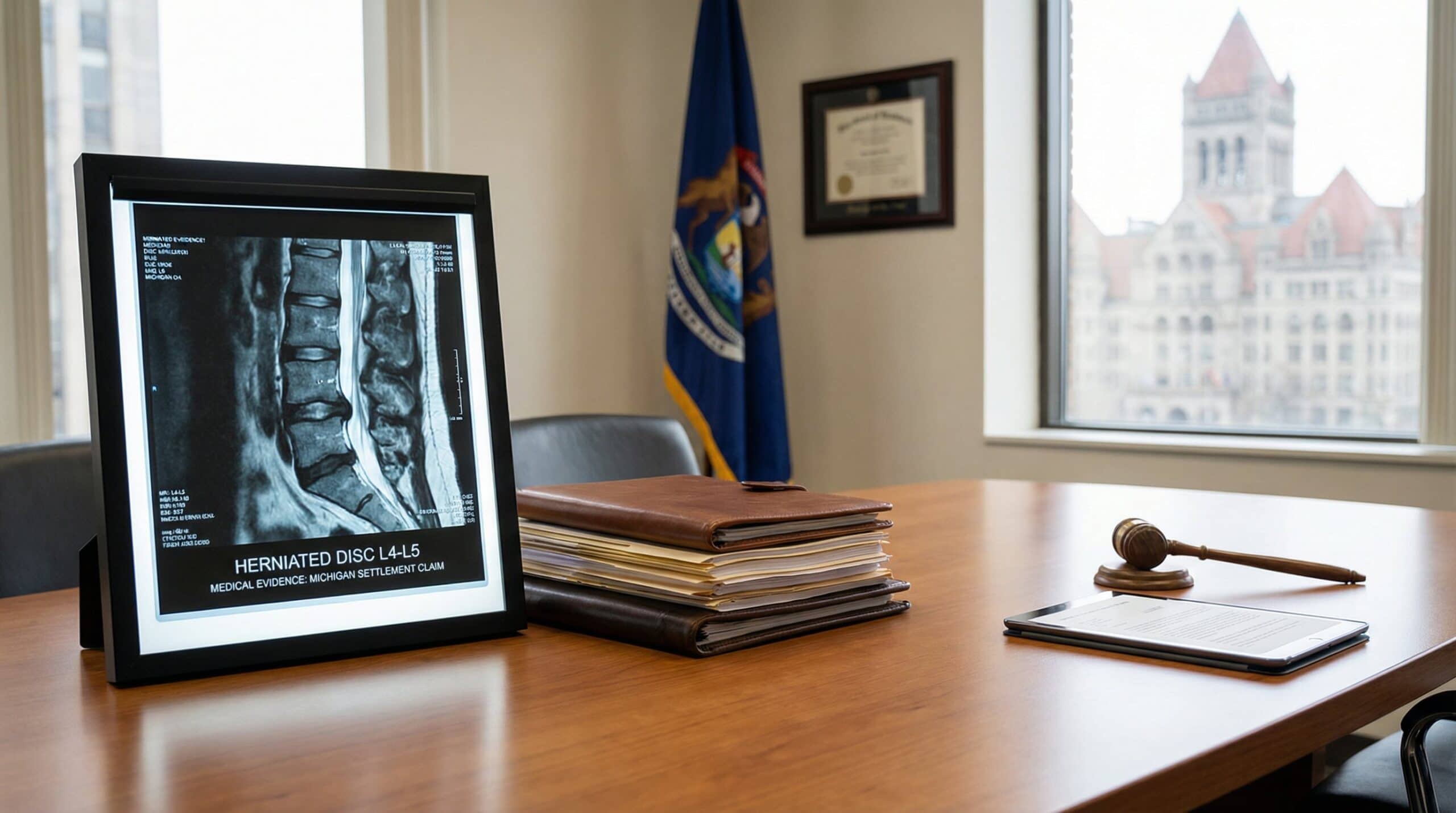
Herniated disc settlements typically exceed soft tissue injury compensation for several compelling reasons that create substantial valuation differences.
Objective Medical Evidence: Herniated discs appear visible on MRI scans, providing objective proof of structural damage that insurance companies cannot easily dispute without challenging the radiologist’s interpretation. Soft tissue injuries by contrast show no visible damage on X-rays or MRIs, making insurance companies much more likely to minimize or outright dispute injury severity as subjective complaints.
Injury Severity Perception: Herniated discs are recognized by juries and insurance companies as inherently serious injuries causing significant pain based on common knowledge about spinal injuries. Soft tissue injuries are often dismissed as minor, temporary, or exaggerated despite causing substantial pain, because most people have experienced minor muscle strains and assume all soft tissue injuries are similar.
Treatment Intensity: Herniated discs often require aggressive treatment including epidural injection series delivering medication directly to inflamed nerves, extensive physical therapy over many months, and comprehensive pain management with specialists. Soft tissue injuries are typically treated with less intensive conservative care like basic physical therapy, over-the-counter medications, and activity modification without specialized interventions.
Permanence: Herniated discs are substantially more likely to cause permanent impairment and chronic pain that may never fully resolve. Soft tissue injuries more commonly fully resolve within months, though severe cases can develop into chronic conditions requiring ongoing management.
Surgery Potential: Herniated discs have clear surgical pathways including discectomies and fusion procedures if conservative treatment fails, adding future medical cost considerations to current valuations. Soft tissue injuries rarely require surgical intervention, limiting potential future medical expenses.
Radiculopathy: Herniated discs often cause nerve compression with radiating pain, numbness, and weakness—objectively testable symptoms through EMG studies and clinical examination that provide additional proof. Soft tissue injuries typically cause localized pain without nerve involvement that can be objectively tested, making pain claims more difficult to prove.
Settlement Comparison: Soft Tissue vs. Herniated Disc
| Factor | Case A: Soft Tissue Strain | Case B: Herniated Disc |
|---|---|---|
| Injury | Lumbar strain | L4-L5 disc herniation with radiculopathy |
| Treatment Duration | 3 months PT, medications | 9 months PT, 3 epidural injections, pain mgmt |
| Medical Bills | $8,000 | $35,000 |
| Lost Wages | $4,000 | $15,000 |
| Result | Full recovery | Ongoing pain, permanent 20-lb lifting restriction |
| Settlement | $25,000 | $110,000 |
The herniated disc settlement is more than 4x higher despite medical bills being less than 5x higher, reflecting the severity, permanence, and objective nature of disc injuries compared to soft tissue strains.
However, properly documented severe soft tissue injuries can still result in substantial settlements, especially when causing chronic pain conditions requiring long-term treatment and creating permanent work limitations.
Medical Documentation Needed to Maximize Your Settlement
Strong medical documentation is the foundation of maximum non-surgical back injury compensation, transforming subjective pain complaints into objective proof of serious injury.
Initial Emergency Treatment: Emergency room records documenting immediate post-accident pain establish temporal causation linking injuries directly to accidents. X-rays performed to rule out fractures demonstrate thoroughness of initial evaluation. Initial diagnosis and treatment plans document that injuries were recognized as serious from day one. Prescriptions for pain medications demonstrate that pain was significant enough to require pharmaceutical intervention immediately.
Diagnostic Imaging: MRI scans represent the gold standard for visualizing disc herniations, bulges, and soft tissue damage that X-rays cannot show. CT scans may show bone abnormalities and spinal alignment issues providing additional injury documentation. X-rays show alignment problems and rule out fractures, though they don’t visualize soft tissues like discs and ligaments. Get imaging as soon as your physician recommends it—delays can allow insurance companies to argue injuries developed after accidents from other causes.
Orthopedic/Neurosurgical Consultations: Specialist evaluations strengthen claims by providing expert opinions on injury severity from physicians whose specialty training makes their assessments highly credible. Specialists explain why surgery isn’t currently necessary but injuries are still serious, countering insurance arguments that non-surgical status means minor injuries. Specialists offer prognoses about permanence based on experience with hundreds of similar injuries. Finally, specialists describe functional limitations in detail with clinical precision that carries weight with insurance adjusters and juries.
Physical Therapy Records: Detailed PT notes documenting objective findings at each session including range of motion measurements, strength testing results, and pain levels on standardized scales create objective progress tracking. Progress documentation over time shows whether victims are improving, plateauing, or declining despite treatment. Functional limitations affecting daily activities get documented through specific examples therapists observe. Home exercise compliance records show victims are doing everything possible to improve. Discharge summaries describing residual impairments document permanent limitations even after maximizing conservative treatment.
Pain Management Records: Documentation from pain management specialists shows chronic pain requiring specialized treatment beyond primary care capabilities. Injection procedure notes and responses documenting how long relief lasted establish treatment effectiveness and need for repeated interventions. Medication management records show pharmacological approaches attempted and their effectiveness or side effects. Notes about pain’s impact on function and quality of life establish disability extending beyond just subjective discomfort.
Primary Care Physician Records: Ongoing documentation of persistent symptoms between specialist visits creates continuous injury documentation without gaps. Medication refills and dosage adjustments demonstrate ongoing symptom management needs. Documentation of how pain affects overall health including sleep disruption and mental health impacts shows injury ripple effects. Long-term treatment plans extending into the future establish chronicity and permanence of conditions.
Functional Capacity Evaluations: Objective testing by certified evaluators measures lifting, carrying, pushing, and pulling capabilities with standardized protocols. Testing documents sitting and standing tolerances showing how long victims can maintain positions before pain forces position changes. Bending and twisting limitation testing demonstrates specific movement restrictions. Comparison to job physical requirements establishes whether victims can return to previous employment or need vocational changes.
Independent Medical Examinations: While insurance companies may require IMEs by their doctors who are often biased toward minimizing injuries, victims can also obtain evaluations from independent experts supporting claims with balanced, credible assessments.
Personal Documentation: Pain journals tracking daily pain levels on 1-10 scales and specific limitations provide detailed symptom documentation. Activity logs showing missed work days, cancelled plans, and abandoned hobbies demonstrate real-life impacts. Photographs and videos demonstrating limitations provide visual proof of disability more powerful than written descriptions. Witness statements from family, friends, and coworkers observing struggles corroborate victim testimony through independent sources.
The more comprehensive and consistent your medical documentation, the harder it is for insurance companies to dispute your injury severity or settlement demands.
Negotiating with Insurance Companies: Common Tactics and Counter-Strategies
Insurance companies use predictable tactics to minimize back injury settlements, especially for non-surgical injuries they hope to dismiss as minor.
When insurance adjusters claim “Your injury isn’t serious—no surgery needed,” experienced attorneys counter by emphasizing objective MRI findings showing structural damage regardless of surgical decisions. They present extensive conservative treatment over many months demonstrating serious injury requiring professional intervention. Documentation of permanent restrictions and ongoing pain despite aggressive treatment proves injury severity. Finally, physician opinions explicitly stating that injuries are serious despite not requiring surgery directly refute adjuster claims.
When adjusters argue “Soft tissue injuries are temporary and minor,” attorneys counter with long treatment duration spanning six months or more demonstrating injuries weren’t minor strains resolving quickly. Documentation of multiple treatment modalities attempted including physical therapy, medications, injections, and specialist care shows injury complexity. Expert testimony on chronic soft tissue conditions educates adjusters about myofascial pain syndrome and other permanent conditions. Finally, detailed documentation of impacts on daily life and work capacity makes abstract pain complaints concrete and relatable.
When insurance companies suggest “Your back problems are degenerative/pre-existing,” attorneys obtain pre-accident medical records showing no prior back complaints or treatment establishing baseline health. They emphasize immediate symptom onset post-accident with emergency room visits and early treatment establishing temporal causation. Expert testimony distinguishing degenerative changes visible on imaging from acute traumatic injuries separates age-related wear from accident trauma. Evidence showing how accidents dramatically worsened any minor pre-existing issues demonstrates legal causation even when some degeneration existed.
When adjusters claim “You don’t need all that treatment,” attorneys present physician testimony supporting treatment necessity based on clinical judgment and experience. Medical literature on standard treatment protocols for herniated discs and similar injuries establishes that victims received appropriate care. Documentation of failed conservative treatments necessitating escalated care shows progressive treatment approach rather than unnecessary expensive interventions. Ongoing symptoms justifying continued treatment demonstrate that victims aren’t just running up bills but genuinely need ongoing care.
When insurance companies make lowball initial offers hoping unsophisticated victims will accept inadequate amounts, attorneys refuse to accept first offers and explain they’re just opening positions. Independent case valuations from experienced attorneys provide objective assessments of fair settlement values. Comprehensive demand packages documenting all economic and non-economic damages educate adjusters about actual case value. Finally, demonstrated willingness to litigate if necessary backed by trial preparation shows insurance companies that attorneys won’t be bullied into cheap settlements.
The Joseph Dedvukaj Firm knows every insurance company tactic from decades of experience. We build comprehensive cases supported by medical experts, thoroughly documented damages, and aggressive negotiation backed by genuine willingness to try cases when companies won’t settle fairly.
When to Settle vs. When to Continue Treatment
One of the most difficult decisions in back injury cases is determining the optimal time to settle.
Don’t Settle Too Early:
Avoid settling until you’ve reached Maximum Medical Improvement (MMI)—the point where your condition has stabilized and doctors can accurately predict future limitations and treatment needs. Settling before MMI risks missing future medical costs that emerge after settlements are final and you’ve signed releases waiving all future claims. You may fail to account for permanent impairment that’s not yet fully apparent when injuries are still evolving. Settlements may underestimate lost earning capacity before you’ve attempted to return to work and discovered your limitations. Finally, you may discover later that surgery becomes necessary after you’ve already settled and released all claims, leaving you personally responsible for surgical costs that could reach $100,000 or more.
Consider Settling When: You’ve definitively reached MMI with your physician confirming your condition has stabilized. All medical treatment to date is comprehensively documented in records you can provide to support damages claims. Future medical needs are understood through physician opinions and valued through expert life care planning. Your prognosis is clear with doctors able to explain what your future looks like with reasonable certainty. A fair settlement offer is on the table that compensates you adequately for all past and future damages. Finally, continuing to trial has significant risks including weak liability evidence, comparative negligence concerns potentially reducing recovery substantially, or unfavorable jurisdiction known for defense verdicts.
Consider Continuing Treatment/Litigation When: You haven’t yet reached MMI and your condition is still evolving with treatment outcomes uncertain. Settlement offers grossly undervalue your damages by 50% or more compared to objective case valuations. The insurance company is acting in bad faith through unreasonable delays, baseless claim denials, or refusal to engage in good faith negotiations. Liability is crystal clear with unambiguous fault evidence and damages are substantial enough to justify litigation costs and time. Finally, you’re genuinely willing to proceed to trial if necessary rather than just threatening litigation you’re not prepared to pursue.
Your attorney should advise on timing based on multiple factors including medical status and prognosis establishing whether MMI has been reached. Assessment of liability evidence strength determines negotiating leverage. Comparison of settlement offers to potential trial outcomes evaluates reasonableness of current offers. Awareness of statute of limitations deadlines ensures claims don’t expire while negotiations drag on. Finally, honest evaluation of financial pressures and needs determines whether immediate settlement despite lower value might be necessary for practical reasons.
Never let financial desperation force premature settlements that undervalue your claim by tens or hundreds of thousands of dollars. Many attorneys can refer you to medical providers who accept payment from eventual settlements, allowing continued treatment without immediate out-of-pocket costs that might otherwise pressure you into early inadequate settlements.
Get Help from Experienced Michigan Personal Injury Lawyers
Back injuries without surgery still deserve fair compensation reflecting your pain, limitations, medical expenses, and diminished quality of life. Don’t let insurance companies minimize your suffering or pressure you into inadequate settlements just because you haven’t had surgery.
The Joseph Dedvukaj Firm has represented Michigan back injury victims for over 30 years, securing substantial settlements for non-surgical injuries including herniated discs, bulging discs, and chronic soft tissue conditions. Our track record includes six-figure recoveries for clients whose insurance companies initially offered only a few thousand dollars, demonstrating our ability to multiply settlement values through skilled advocacy.
Attorney Joseph Dedvukaj’s AV Preeminent rating from Martindale-Hubbell and membership in the National Trial Lawyers: Top 100 reflect his exceptional legal skill and ethical standards recognized by fellow attorneys and judges. Our firm’s reputation encourages insurance companies to settle fairly rather than face us in court where our trial skills have produced substantial verdicts.
When you choose The Joseph Dedvukaj Firm for your back injury case, you receive access to our extensive medical expert network including orthopedic surgeons, pain management specialists, radiologists, and life care planners who provide compelling testimony. We provide thorough documentation of all medical treatment and functional limitations through comprehensive record reviews and strategic medical evaluations. Our accurate valuation based on decades of back injury case experience prevents you from settling for inadequate amounts. We deliver aggressive negotiation challenging every insurance company tactic with evidence-based responses. You pay no upfront costs—we work on a contingency fee basis and advance all case expenses without requiring reimbursement unless we recover compensation. Our trial readiness demonstrated through actual trial experience rather than just negotiation encourages fair settlements because insurance companies know we’ll go to court if necessary.
Don’t accept inadequate compensation for your back injury just because you haven’t had surgery. Contact The Joseph Dedvukaj Firm today for a free consultation with no obligation. We’ll review your medical records carefully, explain what your case is realistically worth based on our extensive experience, and outline a specific strategy for maximum recovery from all available insurance sources.
Time is critical—Michigan’s three-year statute of limitations bars claims filed too late, and the need to document ongoing treatment makes early legal consultation important for protecting your rights. Call 1-866-HIRE-JOE or visit our website to schedule your free consultation. We serve clients throughout Michigan from our Bloomfield Hills office, representing injured people from Detroit to Grand Rapids and everywhere in between.
You’re living with chronic back pain that affects every aspect of your life from work to sleep to relationships. Let us fight for compensation that truly reflects your suffering and losses rather than accepting insurance company minimization. Learn more about our experience with trucking accident injuries and other serious injury cases on our website.