
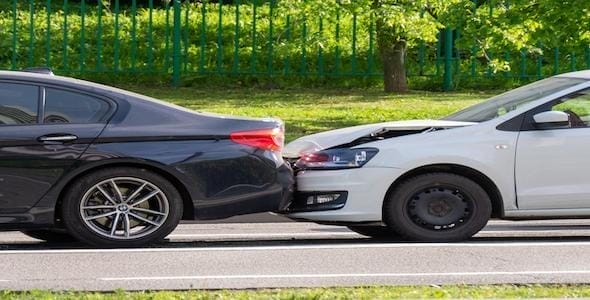

Short answer: Not necessarily. While Michigan’s assured clear distance rule (MCL 257.627) requires drivers to maintain enough space to stop safely, the driver who pulled out in front of you is often at fault—or shares significant fault—for entering your lane without adequate clearance. Liability depends on the specific facts: speed, signaling, right of way, road conditions, and whether either driver had time to react.
Michigan’s Assured Clear Distance Rule
Under MCL 257.627, every Michigan driver must operate their vehicle at a careful and prudent speed that allows them to stop within the assured clear distance ahead. This means maintaining enough following distance and speed to avoid colliding with any person, vehicle, or obstruction on the road.
When a rear-end collision occurs, this statute often creates a presumption that the following driver was at fault—the reasoning being that if you hit the vehicle in front of you, you were either following too closely or driving too fast to stop in time. However, this presumption can be rebutted when the circumstances show that the lead vehicle created a sudden, unavoidable hazard.
When the Driver Who Pulled Out Is at Fault
The driver who pulls out in front of another vehicle is frequently the one who caused the collision. Common scenarios where the pulling-out driver bears primary fault include:
- Pulling into traffic from a side street, driveway, or parking lot without yielding to oncoming traffic that has the right of way
- Changing lanes without checking blind spots or cutting across multiple lanes
- Pulling away from the curb into an occupied travel lane without signaling or yielding
- Making a left turn in front of oncoming traffic without sufficient clearance
- Merging onto a highway or freeway without matching the speed of traffic or yielding to vehicles in the travel lane
Under Michigan traffic law, a driver entering a roadway from a private drive, alley, or side street must yield the right of way to all vehicles already on the roadway (MCL 257.649). A driver who fails to yield and causes a collision has violated a traffic safety statute, which can establish negligence per se.
When You Could Share Fault
Even when the other driver pulled out improperly, you may share some fault if:
- You were exceeding the speed limit, which reduced your ability to stop
- You were following another vehicle too closely when the vehicle ahead moved and revealed the pulling-out driver
- You were distracted and failed to notice the other vehicle entering your lane with enough time to brake or steer
- Road conditions (rain, snow, ice) required a lower speed than you were traveling
Under Michigan’s modified comparative negligence law, your ability to recover pain and suffering damages depends on your percentage of fault. If you were less than 51% at fault, your damages are reduced by your fault percentage. If you were 51% or more at fault, you are barred from recovering non-economic damages.
How Fault Is Determined
Liability in a pull-out collision is fact-specific. The following evidence is used to establish who was at fault:
- Police report: The investigating officer’s findings, including any citations issued, witness statements recorded, and the officer’s assessment of fault
- Physical evidence: Point of impact on both vehicles, skid mark length and location, debris pattern, and final resting positions of the vehicles
- Dashcam or surveillance footage: Video evidence can definitively show whether the driver who pulled out had time and space to enter the lane safely
- Witness testimony: Passengers, bystanders, and other drivers who saw the crash can corroborate whether the pulling-out driver failed to yield or signal
- Vehicle data: Event data recorders (EDRs) can show the speed of both vehicles and whether brakes were applied before impact
Damages You Can Recover in Michigan
If the other driver was at fault for pulling out in front of you, Michigan law allows you to recover:
- Economic damages: Medical bills, lost wages, rehabilitation costs, vehicle repair or replacement, and other out-of-pocket expenses
- Non-economic damages: Pain and suffering, emotional distress, and loss of enjoyment of life (only if your injuries meet Michigan’s serious impairment of body function threshold under MCL 500.3135)
Your PIP benefits cover your medical expenses and lost wages regardless of fault under Michigan’s no-fault system.
Steps to Take After a Pull-Out Collision
- Call 911 and request a police report. The officer’s investigation and any citations issued will be important evidence.
- Document the scene with photos: damage to both vehicles, the point of impact, road conditions, traffic signals, sight lines, and skid marks.
- Get witness information. Other drivers or pedestrians who saw the vehicle pull out in front of you can corroborate your account.
- Seek medical attention promptly, even if injuries seem minor. Whiplash, concussions, and soft tissue injuries often have delayed symptoms.
- Do not admit fault at the scene. You may not have the full picture of what happened, and any statements you make can be used against you later.
- Contact an attorney before giving recorded statements to any insurance company.
Frequently Asked Questions
Is the rear driver always at fault in Michigan?
No. While the assured clear distance rule (MCL 257.627) creates a presumption that the rear driver was following too closely, this presumption can be overcome. If the lead vehicle entered your lane suddenly and without warning—such as pulling out from a driveway without yielding—the driver who pulled out is at fault for creating the hazard.
What if the other driver pulled out but I was speeding?
Both drivers may share fault. The other driver may be primarily at fault for failing to yield, but your speed may be considered a contributing factor. Michigan’s comparative negligence rules would reduce your recovery by your percentage of fault.
What if there are no witnesses?
Physical evidence becomes critical. The location of vehicle damage, skid marks, the point of impact on the roadway, and EDR data can all establish how the collision occurred even without eyewitness testimony. An accident reconstruction expert can analyze this evidence to determine fault.
Get a Free Case Evaluation
If someone pulled out in front of you and caused a collision, an experienced attorney can investigate the facts, preserve evidence, and protect your right to fair compensation. Call The Joseph Dedvukaj Firm, P.C. at 1-866-HIRE-JOE or visit 1866hirejoe.com for a free consultation.