
The car accident was terrifying, you were struck at an intersection and your airbag deployed with explosive force. While the airbag likely saved you from more serious injury, you’re now dealing with significant airbag injuries including severe chest bruising, chemical burns on your arms and face from the airbag powder, and ringing in your ears from the deployment noise. Your doctor says these injuries are “normal” from airbag deployment, but you’ve researched and found that some airbag injuries indicate defective products.
You wonder: What airbag injuries are normal versus excessive? When do airbag bruises and burns indicate a defective airbag? Can you sue if the airbag itself caused injuries?
What about airbags that fail to deploy at all? How do you know if you have a defective airbag lawsuit claim?
Airbag injuries present complex questions. Airbags are designed to prevent serious injury and death, but their explosive deployment inevitably causes some harm. Understanding the difference between expected airbag injuries and those indicating defective design or manufacture, recalled airbag issues (especially Takata airbags), when product liability claims apply, failure-to-deploy situations, and how to pursue compensation for airbag-related injuries helps accident victims protect their rights while navigating the balance between airbag benefits and the injuries they cause.
Normal vs. Excessive Airbag Injuries
Airbag deployment involves a carefully controlled explosion designed to save lives, but the violence of that deployment inevitably causes some injury. Understanding the difference between expected injuries and those suggesting defects is crucial for knowing when you have a product liability claim.
When crash sensors detect impact, the inflator ignites and nitrogen gas rapidly inflates the airbag in just 1/20th of a second. The airbag deploys at approximately 200 mph before immediately deflating as gas escapes. This explosive process saves lives by cushioning the impact between occupants and the vehicle interior, but it’s inherently violent.
Expected airbag injuries, while unfortunate, fall within the acceptable range of harm from a properly functioning safety device. Chest and facial bruising from airbag impact typically heals within one to three weeks. Arm abrasions from friction against the airbag fabric are common.
Chemical burns from sodium hydroxide in airbag powder, usually first or second-degree burns on hands, arms, and face, represent normal consequences of deployment. Temporary hearing loss or tinnitus from the 170-decibel deployment noise may last days to weeks. Corneal abrasions from airbag powder and temporary vision issues usually prove minor.
Even minor wrist fractures can occur when hands positioned on the steering wheel bear the force of deployment.
However, certain injuries suggest that something went wrong, that the airbag was defectively designed, manufactured, or installed. Severe facial or head trauma including skull fractures, severe facial bone fractures, or traumatic brain injuries should not result from properly functioning airbags. Third-degree chemical burns or extensive burns covering large areas may indicate excessive chemical deployment or defective materials rather than normal airbag function.
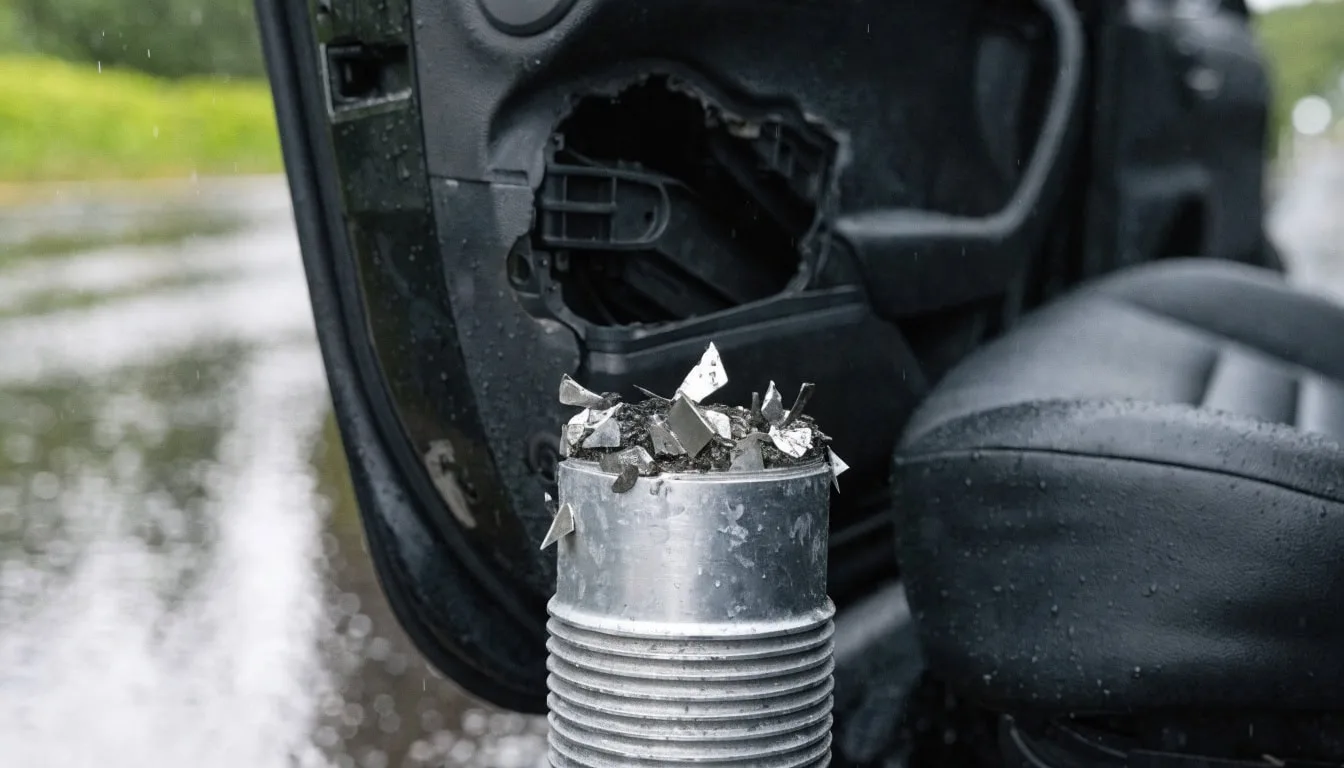
Shrapnel injuries definitively indicate defects. When metal fragments from the airbag inflator cause lacerations, puncture wounds, or embedded metal, as occurred with the Takata airbag crisis, you’re dealing with a manufacturing defect that has proven fatal in numerous cases. Deployment injuries without a crash, whether from spontaneous deployment or deployment during minor fender-benders that don’t warrant it, signal defective sensors or inflator malfunctions.
Failure to deploy in serious crashes where deployment should have occurred and would have prevented injuries represents another form of defect. When airbag systems fail to protect occupants in situations they’re specifically designed for, product liability attaches.
At The Joseph Dedvukaj Firm, we work with automotive safety experts to distinguish between injuries from properly functioning airbags and those indicating defects, pursuing product liability claims against manufacturers when defective airbags cause additional, preventable harm.
Defective Airbag Recalls: The Takata Crisis
The Takata airbag recall stands as the largest automotive recall in history, affecting more than 67 million airbags installed in over 42 million vehicles across nearly every major manufacturer. The scope of this safety crisis cannot be overstated. It has claimed at least 58 lives worldwide (including 28 in the United States) and caused over 400 serious injuries, transforming a safety device designed to protect into a deadly weapon.
The problem lies in Takata’s choice of ammonium nitrate as a propellant in their airbag inflators. This chemical compound degrades over time, particularly when exposed to heat and humidity, conditions common in many parts of the country. As the propellant deteriorates, it becomes unstable and can explode with excessive force during deployment.
The metal inflator casing ruptures from this explosive force, sending sharp metal fragments flying into the vehicle cabin like shrapnel from a grenade. These metal shards have caused devastating facial lacerations, puncture wounds, and in numerous cases, fatal injuries when fragments severed major blood vessels or penetrated vital organs.
The recall began tentatively in 2013 with initial recalls affecting limited vehicle models. As investigators understood the full scope of the problem, recalls expanded dramatically between 2014 and 2016. By 2017, the financial burden forced Takata into bankruptcy.
As of 2026, recall and replacement efforts continue. While approximately 98% of affected vehicles have been repaired, some vehicles still have unreplaced Takata airbags on the road, posing ongoing danger to drivers and passengers who may not realize they’re sitting behind a potential explosive device.
Nearly every major manufacturer has been affected. Honda faced the most extensive recalls, but Toyota, Ford, Nissan, BMW, Mercedes-Benz, and dozens of other automakers all incorporated these defective airbags into their vehicles. The breadth of affected manufacturers means that checking your own vehicle becomes essential.
You can determine if your vehicle is affected by visiting the NHTSA website at nhtsa. gov/recalls and entering your Vehicle Identification Number (VIN). The system confirms if any open recalls exist for your specific vehicle.
If your car is subject to the Takata recall, replacement is free. Manufacturers must replace the defective airbags at no cost to you, though parts shortages have created frustrating delays for many owners waiting for safe replacement components.
Beyond Takata, other airbag recalls continue to emerge. ARC airbags have shown similar shrapnel issues. Various manufacturers have recalled vehicles for deployment timing issues, sensor malfunctions, and software problems.
Regularly check your vehicle for recalls. What’s safe today may be recalled tomorrow as new defects are discovered.
Product Liability Claims for Defective Airbags
When airbags are defective, manufacturers face strict product liability regardless of how careful they were during manufacturing. This powerful legal doctrine protects consumers from dangerous products they cannot possibly evaluate for safety themselves. Unlike negligence claims where you must prove the manufacturer acted carelessly, strict product liability requires only four elements.
The product (airbag) was defective, the defect existed when it left the manufacturer’s control, the defect caused your injuries, and you were using the product as intended.
Three types of defects create liability:
- Design Defects: The airbag was designed in an unreasonably dangerous way, such as Takata’s choice of ammonium nitrate propellant when alternative safer designs were feasible
- Manufacturing Defects: The airbag was improperly manufactured despite a safe design, including contamination during assembly or improper welds that caused the product to depart from intended specifications
- Failure to Warn: Inadequate warnings about airbag risks, failure to recall known defective airbags timely, or insufficient instructions for safe use
Failure-to-deploy situations create a fourth category of liability. When airbags don’t deploy in qualifying crashes due to sensor failures, inflator malfunctions, electrical system problems, or software errors, victims suffer injuries that a properly deployed airbag should have prevented. The manufacturer’s liability stems from selling a safety device that failed to function when needed most.
Product liability claims can target multiple defendants along the distribution chain. The airbag manufacturer like Takata or Autoliv bears primary responsibility, but vehicle manufacturers who incorporated defective components share liability. Component part manufacturers who supplied defective pieces to the airbag assembly may also be sued, and in some cases, even distributors and retailers face liability.
The damages available in defective airbag cases fall into three categories. Economic damages compensate for medical expenses treating airbag injuries, lost wages during recovery, future medical care for permanent injuries, and property damage. Non-economic damages address pain and suffering, permanent scarring and disfigurement, loss of quality of life, and emotional distress.
In egregious cases where manufacturers knew of defects but concealed them, recklessly disregarding consumer safety, punitive damages become available. Many Takata cases involved punitive damages because the company concealed known dangers for years while people died from their defective products.
Many defective airbag claims are consolidated into class actions or mass torts, providing efficiency in litigation, shared expert costs, consistent outcomes, and often substantial settlements. However, individual claims remain possible and may yield higher compensation for serious injuries than class action settlements that divide recovery among thousands of claimants.
Airbag Injuries vs. Crash Injuries: Distinguishing Causes
A critical issue in airbag injury cases involves determining whether injuries resulted from the crash impact itself or from airbag deployment. This distinction matters enormously because it determines who bears liability and what legal theories apply.
Injury location and patterns provide important clues. Chest and facial bruising typically indicate airbag impact rather than collision forces. Side impacts and leg injuries more commonly result from crash forces.
Chemical burns definitively point to airbag powder exposure, while shrapnel wounds can only come from defective airbag inflators that ruptured during deployment.
Medical records provide crucial documentation. Emergency room physicians and trauma surgeons note the cause of injuries based on their appearance and location. Burn patterns can be analyzed to determine whether they’re consistent with airbag deployment.
When shrapnel is involved, trajectory analysis helps reconstruct how metal fragments traveled from the inflator to the injury site. Expert medical testimony explains these technical findings to juries in language they can understand.
Accident reconstruction adds another layer of evidence. Engineers analyze crash severity by examining vehicle damage, calculating impact forces based on speed and angles, and determining what injury patterns the crash type would be expected to produce. They then compare expected injuries to actual injuries.
Discrepancies suggest that something beyond normal crash forces contributed to the harm, potentially indicating defective airbag deployment.
Cases often involve multiple liable parties. The at-fault driver who caused the accident and the airbag manufacturer whose defective product caused additional injuries may both bear responsibility. Consider a drunk driver who runs a red light and causes a serious accident.
During that collision, the airbag deploys with excessive force, causing severe facial fractures the crash alone wouldn’t have produced. You can sue both the drunk driver for causing the accident and the manufacturer for the defective airbag that caused additional, preventable injuries. This approach maximizes recovery by pursuing compensation from multiple insurance policies and responsible parties.
Compensation for Airbag-Related Injuries
Airbag injury damages depend heavily on the severity of harm and whether the injuries resulted from normal airbag deployment or defective products. When defective airbags cause additional, preventable injuries, compensation can be substantial.
| Injury Severity | Typical Injuries | Medical Expenses | Lost Wages/Capacity | Pain & Suffering | Total Range |
|---|---|---|---|---|---|
| Minor | Bruising, mild burns, temporary hearing issues | $1,000-$10,000 | Minimal | $5,000-$25,000 | $10,000-$50,000 |
| Moderate | Significant burns, fractures, extended recovery | $10,000-$100,000 | $5,000-$50,000 | $25,000-$150,000 | $50,000-$300,000 |
| Severe | Permanent scarring, vision loss, traumatic brain injury | $100,000-$1,000,000+ | $500,000-$5,000,000+ | $500,000-$5,000,000+ | $1,000,000-$10,000,000+ |
| Fatal | Takata shrapnel deaths | $10,000-$20,000 (funeral) | $1,000,000-$10,000,000+ (loss of support) | $500,000-$5,000,000+ (loss of companionship) | $2,000,000-$20,000,000+ |
Several factors affect the value of airbag injury claims. Injury severity and permanence matter most, temporary bruising warrants far less compensation than permanent vision loss or death. Whether the injuries resulted from a clear product defect versus normal deployment significantly impacts value, as defective product cases typically yield higher damages.
The manufacturer’s knowledge of the defect becomes crucial, particularly when seeking punitive damages for concealed dangers. Class action settlements are divided among all victims, while individual claims may yield higher compensation for serious injuries. The victim’s age and earning capacity determine lost wage calculations, with younger victims facing decades of lost income.
Finally, whether claims proceed individually or as class actions affects recovery, class action settlements are divided among all victims, while individual claims may yield higher compensation for serious injuries.
Get Help from Experienced Michigan Personal Injury Lawyers
Airbag injuries raise complex questions about whether harm resulted from necessary safety device deployment or defective product. Determining liability requires investigation, expert analysis, and understanding of both automotive product liability and accident law.
The Joseph Dedvukaj Firm handles both traditional auto accident cases and product liability claims involving defective airbags.
We investigate whether injuries resulted from defective products and pursue all liable parties.
Attorney Joseph Dedvukaj’s AV Preeminent rating and National Trial Lawyers: Top 100 membership demonstrate exceptional legal skill. Our firm’s track record includes over $350 million recovered for Michigan injury victims.
When you choose The Joseph Dedvukaj Firm, you receive:
- Defect investigation and recall verification
- Product liability expert coordination
- Medical causation analysis
- Multiple defendant identification
- Comprehensive damage documentation
- No upfront costs, contingency fee basis
If you suffered serious injuries from airbag deployment or failure, contact The Joseph Dedvukaj Firm today for a free consultation. Call 1-866-HIRE-JOE or visit our website. We serve Michigan airbag injury victims from our Bloomfield Hills office.
Time is critical. Product liability claims face statutes of limitations, and evidence preservation is essential. Early consultation ensures proper investigation while evidence is available.
Your airbag injuries deserve thorough evaluation. Let experienced attorneys determine all liable parties and pursue maximum compensation. Learn more about our traumatic brain injury practice for severe airbag-related head injuries.